Google: Seven Surfaces, One Feed
Good ideas travel faster when you share them; forward this to someone who’d find it useful.
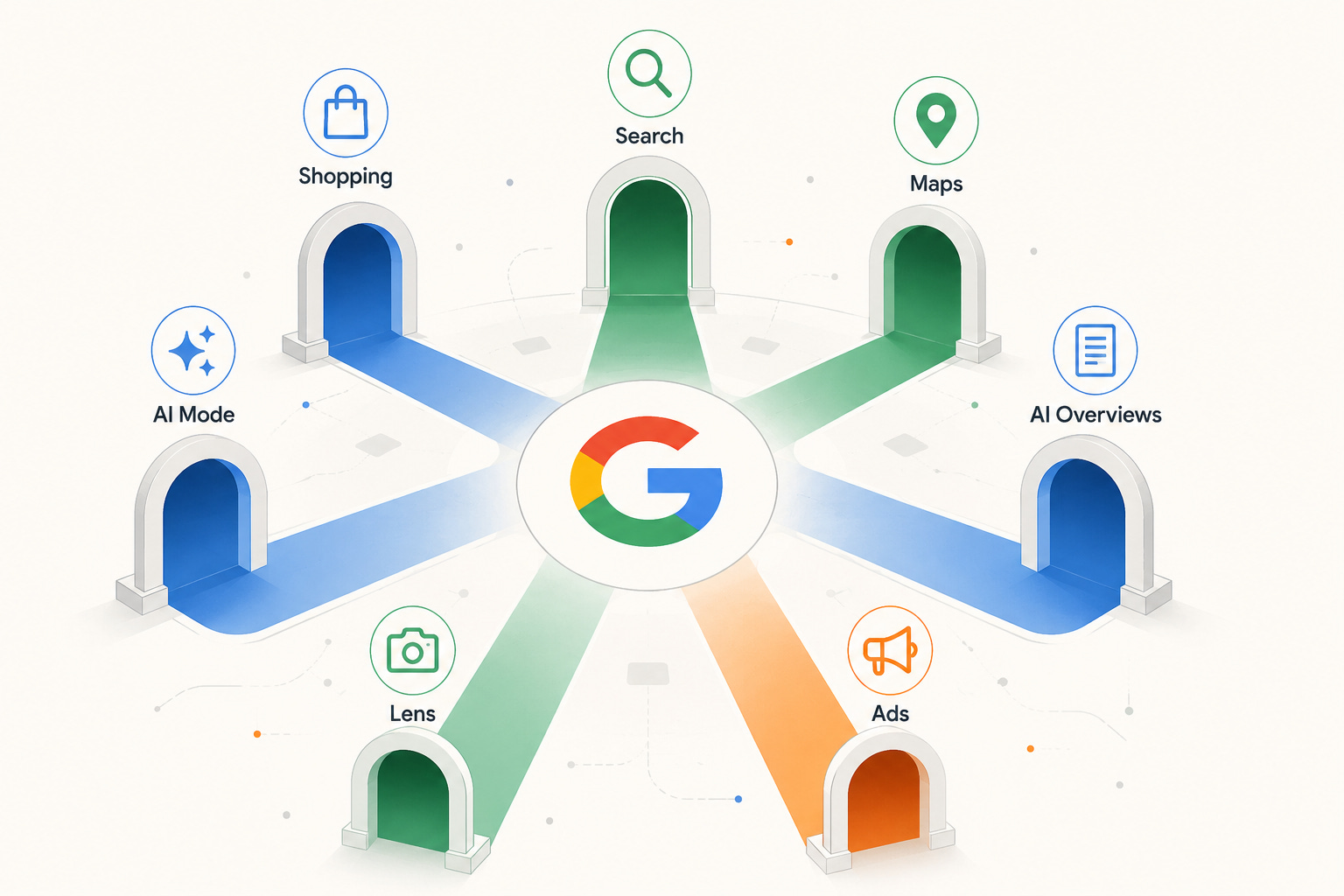
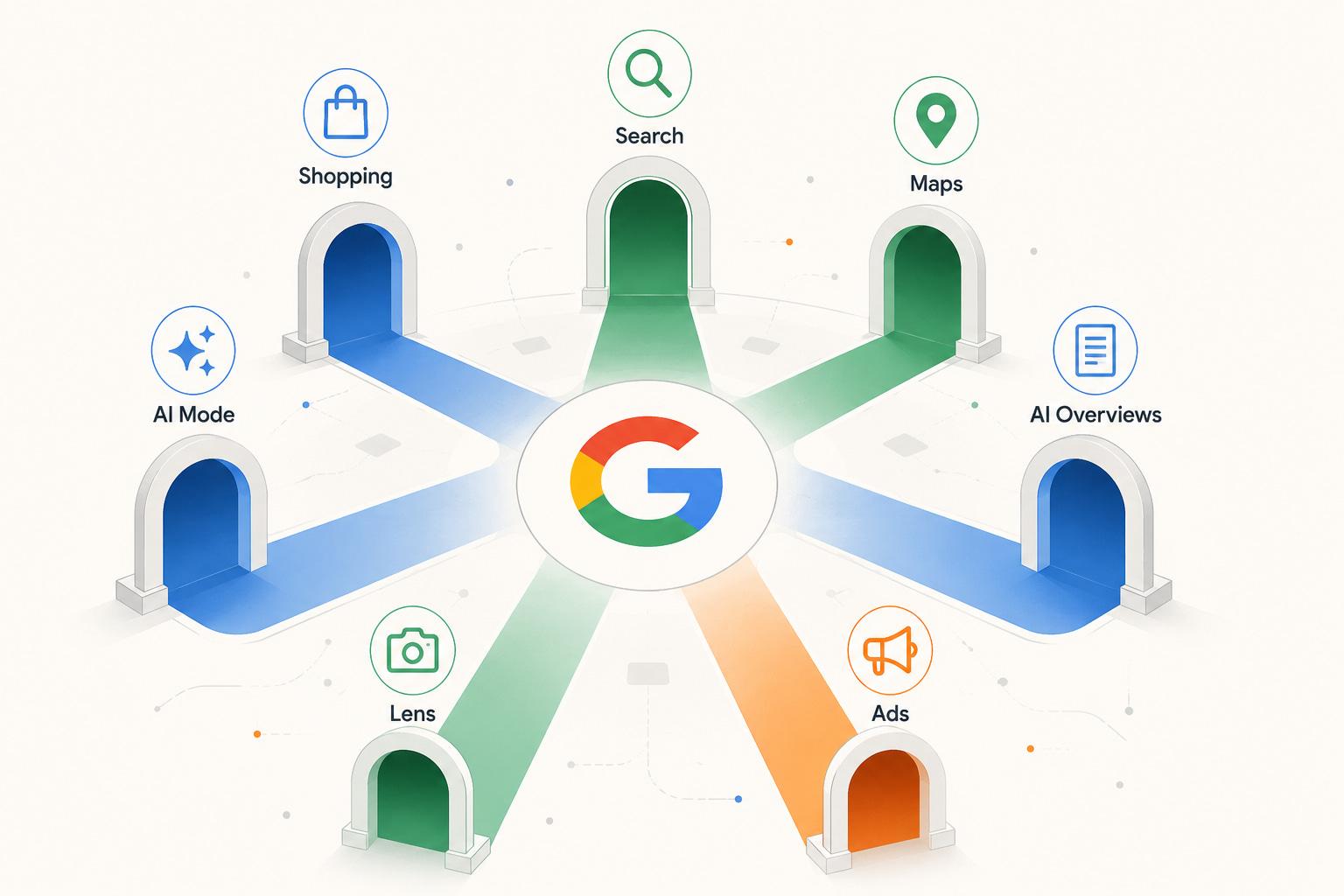
Google no longer has one storefront. It has seven. Most merchants optimize only one.
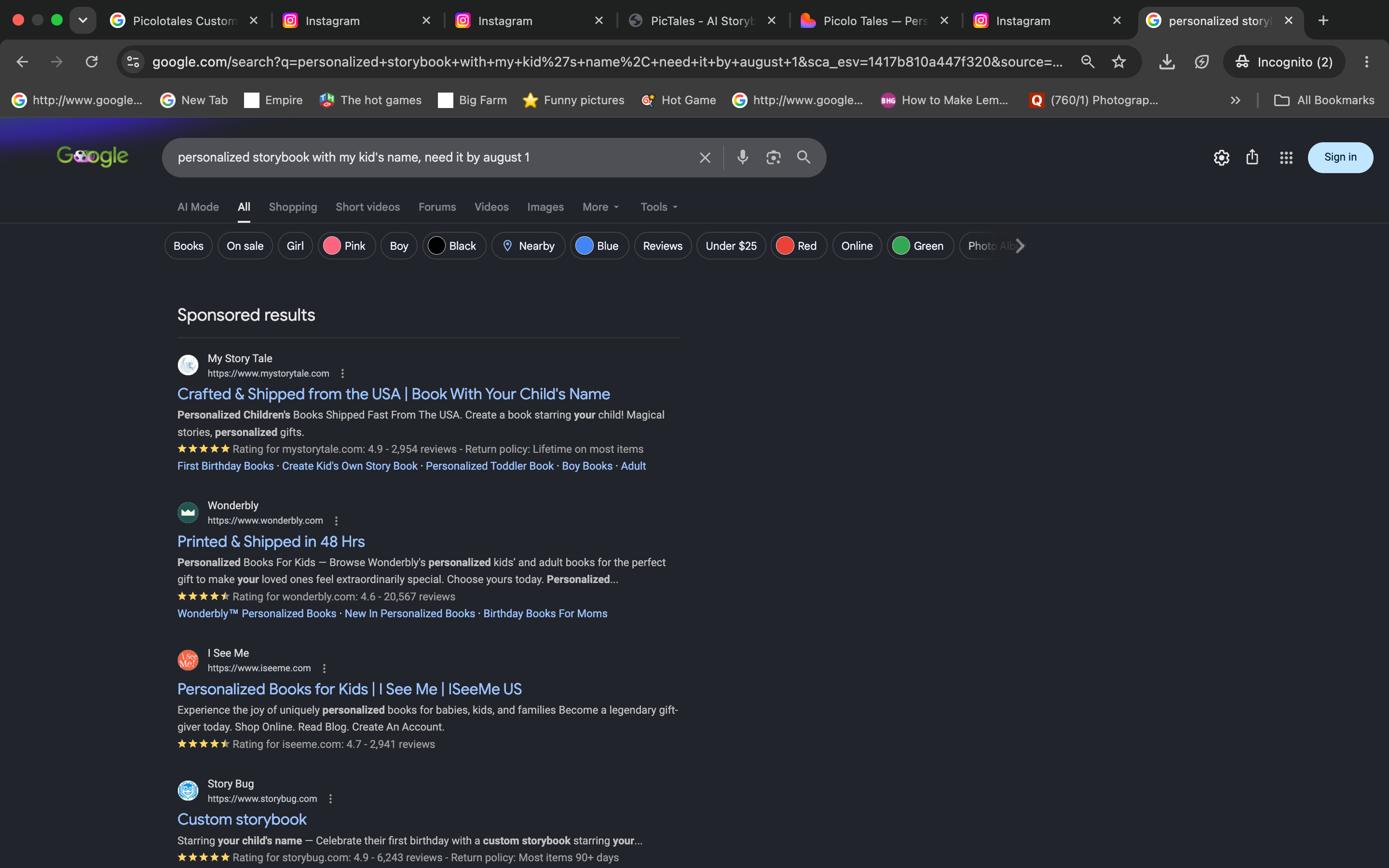
Here’s what that looks like in practice. A parent needs a personalized storybook by August 1st. They type “personalized storybook with my kid’s name, need it by august 1” into Google. Before a single organic result loads, four sponsored ads fill the screen — My Story Tale, Wonderbly, I See Me, Story Bug — each bidding for exactly this moment of deadline-driven intent.
One small storefront in that space, Picolo Tales, isn’t one of them. Not because it lost the auction, but because it was never entered. While competitors pay a premium for that split-second of intent, this piece is about the six other ways Google decides whether you exist at all — the ways that don’t require an auction.
Historically, ranking in Google Search was enough to be discovered. Today, a merchant may appear in Search but be absent from Shopping, invisible in AI Mode, excluded from Maps, and never recognized by Lens. Optimizing one surface no longer means optimizing Google.
Organic search, free Shopping listings, AI Mode, Maps, AI Overviews, Lens, and Performance Max — each has its own eligibility rules, its own buyer intent, and its own way of deciding whether you exist at all.
What most merchants — and the agencies managing their accounts — get wrong: they treat their Google Merchant Center feed as a one-time technical setup task instead of what it actually is — the single prerequisite that determines eligibility for the majority of these surfaces simultaneously. Merchant Center has quietly become Google's primary commerce identity layer for products — the system that decides whether you're eligible to appear across multiple surfaces, not just paid ads. And most of that eligibility is free. This piece focuses there — on the six surfaces you earn through data quality, not spend — because that’s the part almost every agency underserves.
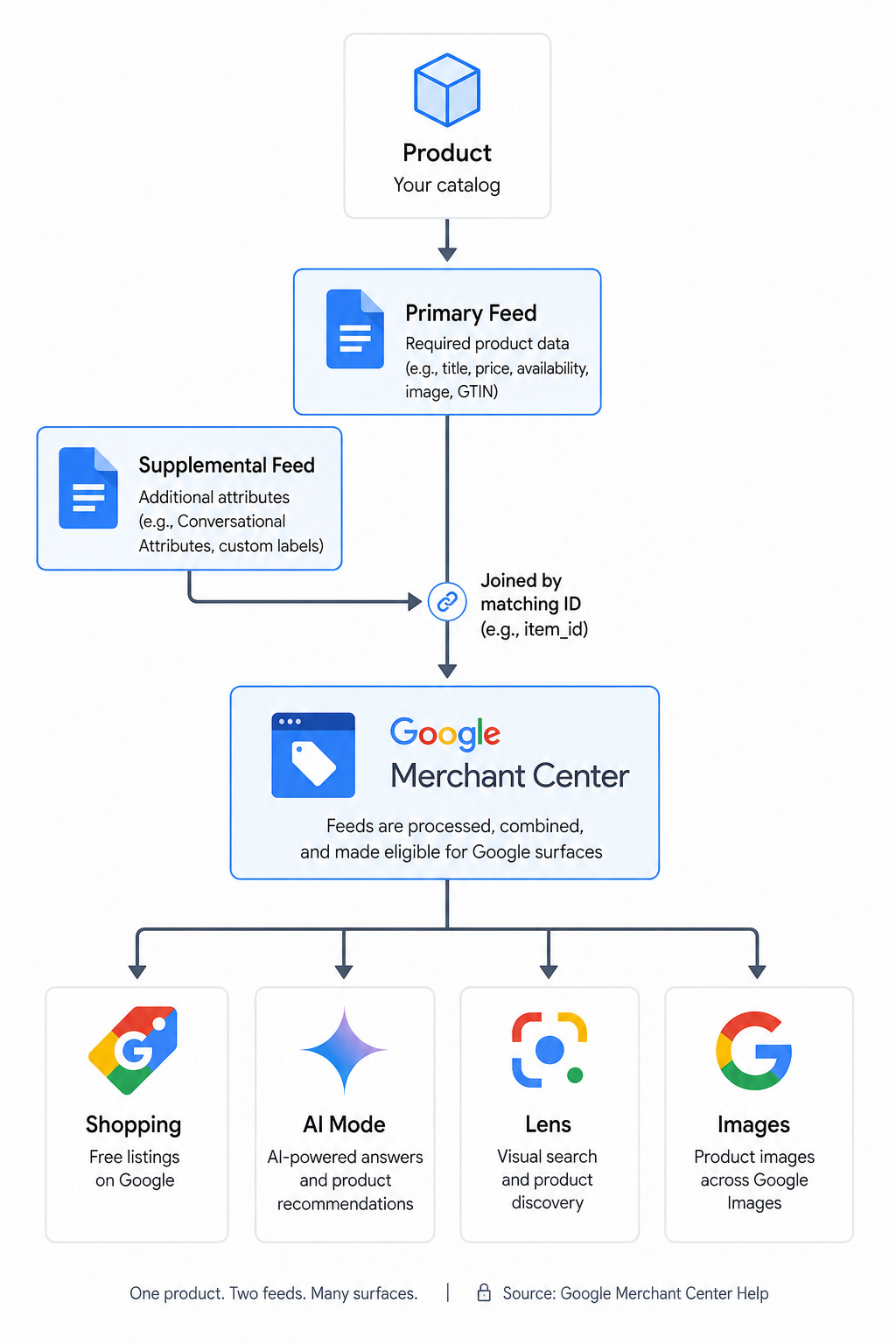
A few terms worth defining before going further, since they carry the rest of this piece: your primary feed is the core product data submitted to Merchant Center; a supplemental feed is an optional secondary data source joined to it by product ID; Merchant API is Google’s current feed-submission interface (replacing the Content API, below); GMC Next is the current Merchant Center interface itself; and Product Studio is Google’s free built-in image/video tool, covered later.
How Google’s Seven Surfaces Actually Work
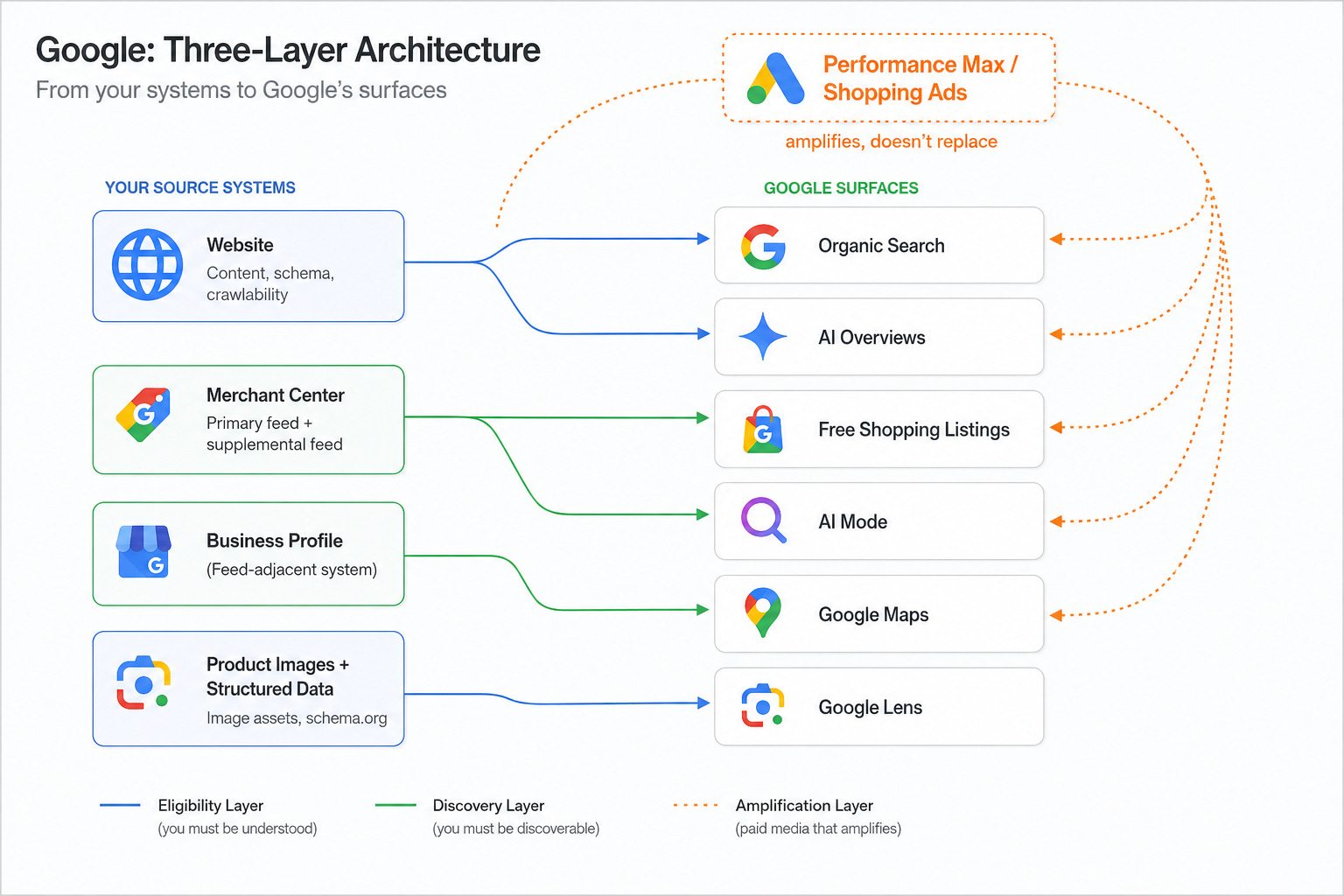
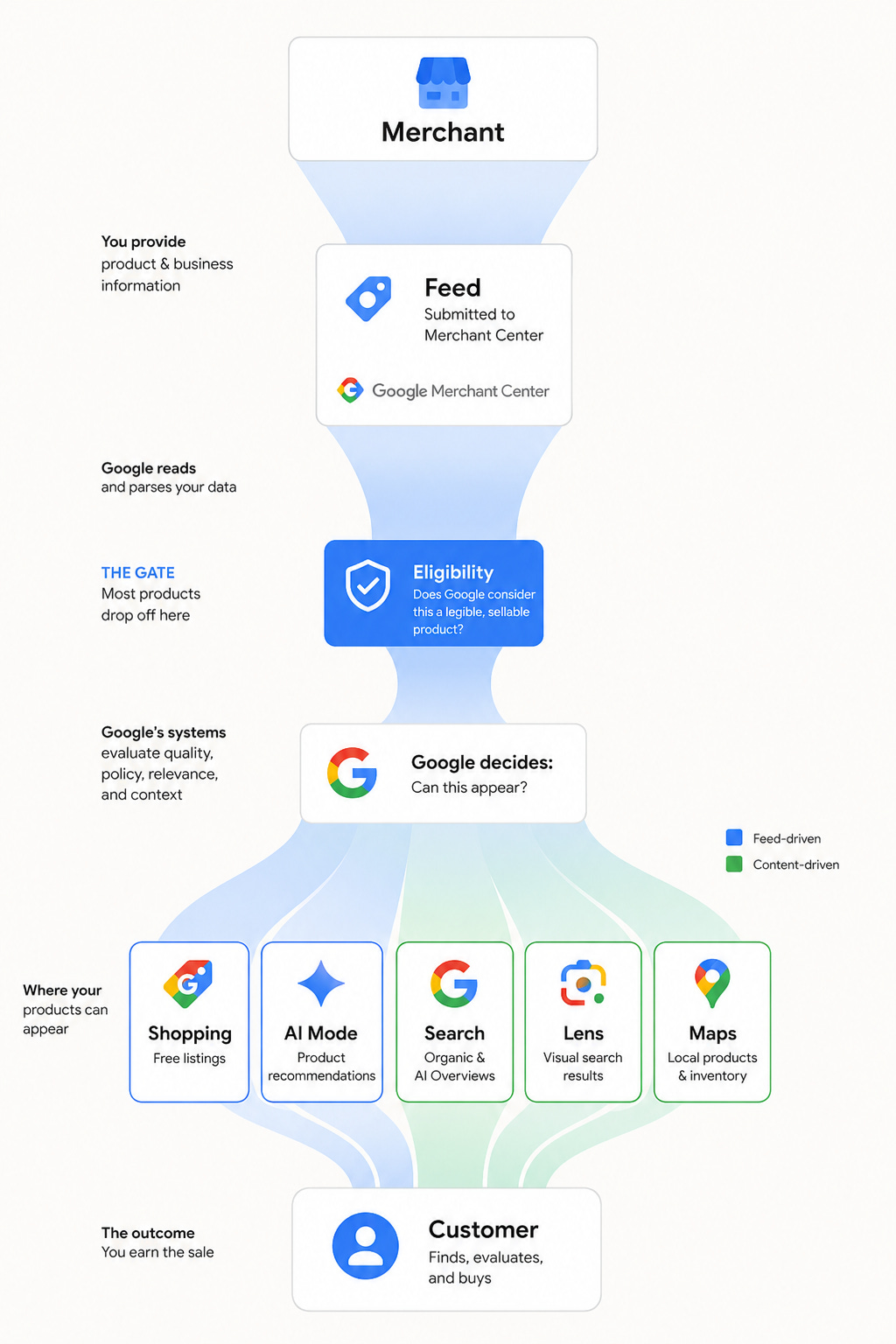
The gap most merchants — like Picolo Tales — fall into: existing on Google isn't a single yes-or-no state, it's seven separate ones, and being invisible on even one can be enough to lose the sale. Underneath all seven, there's really just three layers doing the work. An eligibility layer — your feed and Merchant Center — decides whether you qualify to appear at all. A discovery layer — your website's content, crawlability, and schema — decides whether you get interpreted correctly. An amplification layer — paid Shopping and Performance Max — decides whether you get pushed to the front of a surface you're already eligible for. Most merchants only ever touch the third layer. This piece is about the first two, because nothing you buy fixes them.
The seven surfaces describe what Google looks like from the outside. The three layers explain why it works that way. If this piece leaves you with exactly one framework, make it this one — eligibility, then discovery, then amplification, in that order, every time.
This distinction matters because most ecommerce teams divide work the opposite way. SEO owns Search. Paid media owns Shopping. Catalog or merchandising ops owns product data. Google doesn't see those as separate systems — it combines all of it before deciding whether a product deserves visibility anywhere.
The system architecture — what feeds what:
The merchant's mental model — the same idea, from where a merchant actually stands:
The Free Surfaces (Where This Piece Focuses)
Google Shopping free listings exist inside GMC Next and are enabled by default for compliant accounts — most merchants don’t realize a free tier exists separately from paid Shopping Ads. Free listings surface across the Shopping tab, Search, Images, Lens, and Maps whenever feed and policy requirements are met. It’s the most underused surface on the platform merchants use the most.
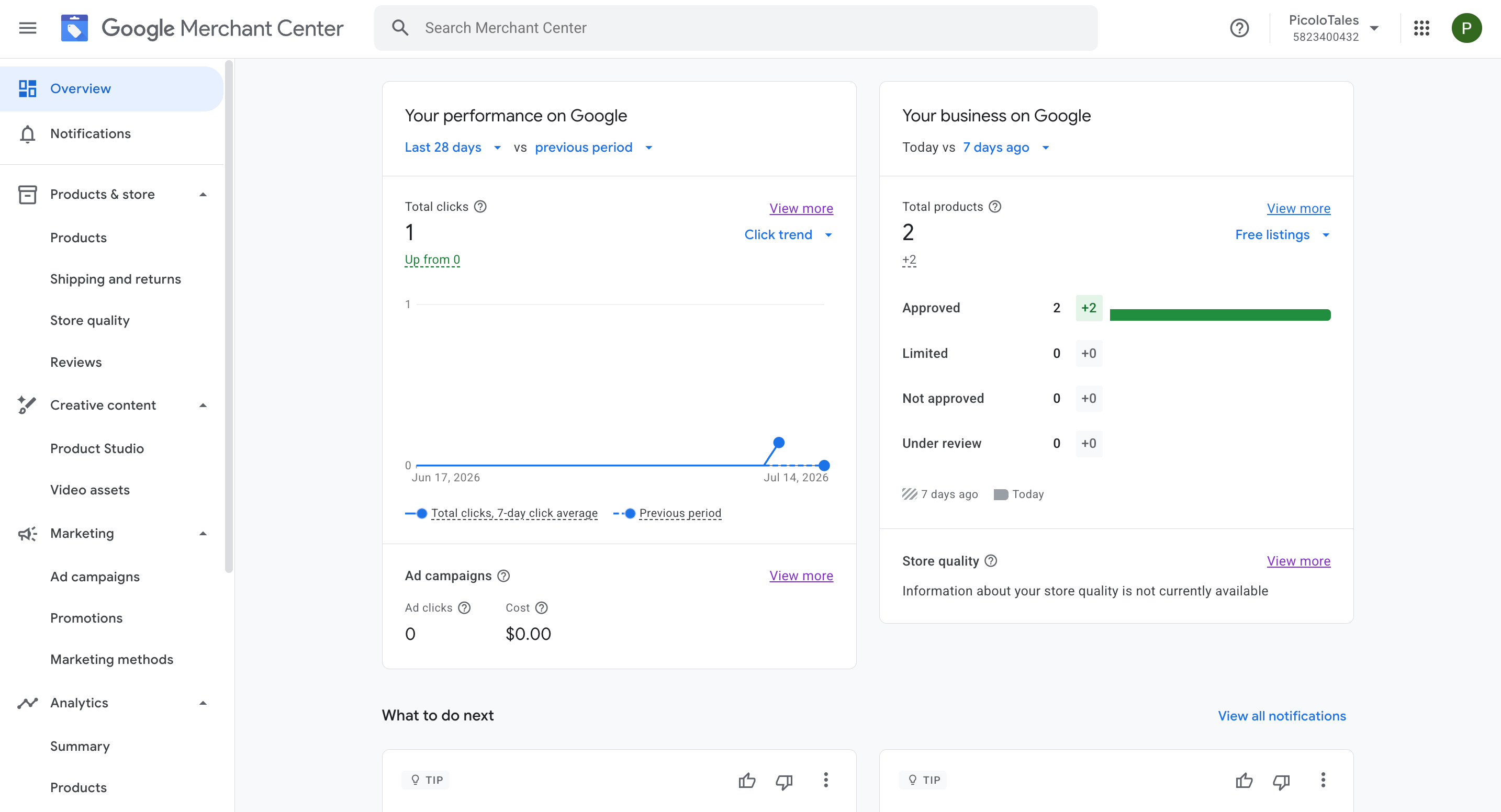
Google AI Mode is one of the fastest-evolving transactional surfaces on Google in 2026, and it’s free. Google’s own documentation indicates AI Mode can draw on Merchant Center data as a primary input for product responses — but not the only one; it also blends web content and Knowledge Graph signals. There’s no separate paid certification. If your feed is clean and your free listings are eligible, you’re already in the pool it draws from.
Organic Search still drives more volume than any other surface here. SEO fundamentals haven’t gone away — they’ve just stopped being sufficient on their own.
Google Maps matters for merchants with a physical presence or a defined service area: product visibility in local search is feed-adjacent and almost always unmanaged. It does not apply to every business model — a purely online storefront with no physical location and no in-person customer contact is explicitly ineligible for a standard Business Profile, per Google’s own guidelines.
AI Overviews are informational today — they summarize and cite, but don’t reliably surface transactional product cards yet.
Google Lens is visual search. Image quality and visual match come first — that’s what gets a product recognized at all; structured data then helps Google attach the right identity and commerce context to what it already matched.
The Paid Surface (For Context)
Performance Max and Shopping Ads are the paid layer most agencies already manage — bought visibility that amplifies organic listing quality rather than replacing it. Worth knowing they exist and worth knowing they underperform on top of a weak feed.
What Powers Each Surface, and How You’d Measure It
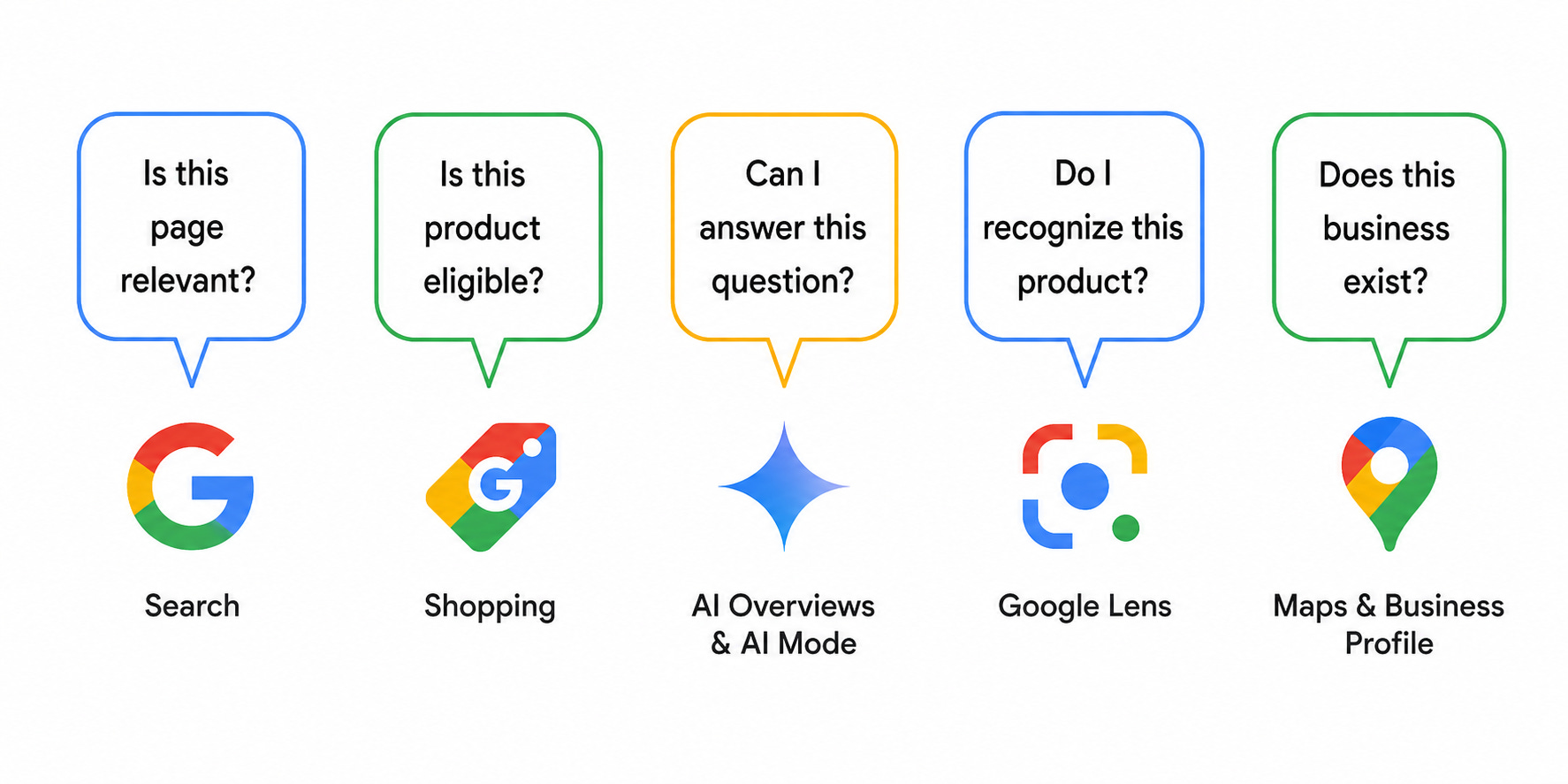
Every Google surface asks a different question.
Search asks: is this page relevant?
Shopping asks: is this product eligible?
AI Mode asks: can I confidently answer this shopper’s question?
AI Overviews asks: can I summarize a useful answer here?
Lens asks: do I recognize this product visually?
Maps asks: does this business exist here?
Those questions get answered by different data sources, which is why fixing one system often changes nothing — and fixing the right system changes several surfaces at once. Each surface also needs its own measurement instrument; a single “are we visible on Google yet” check doesn’t work here.
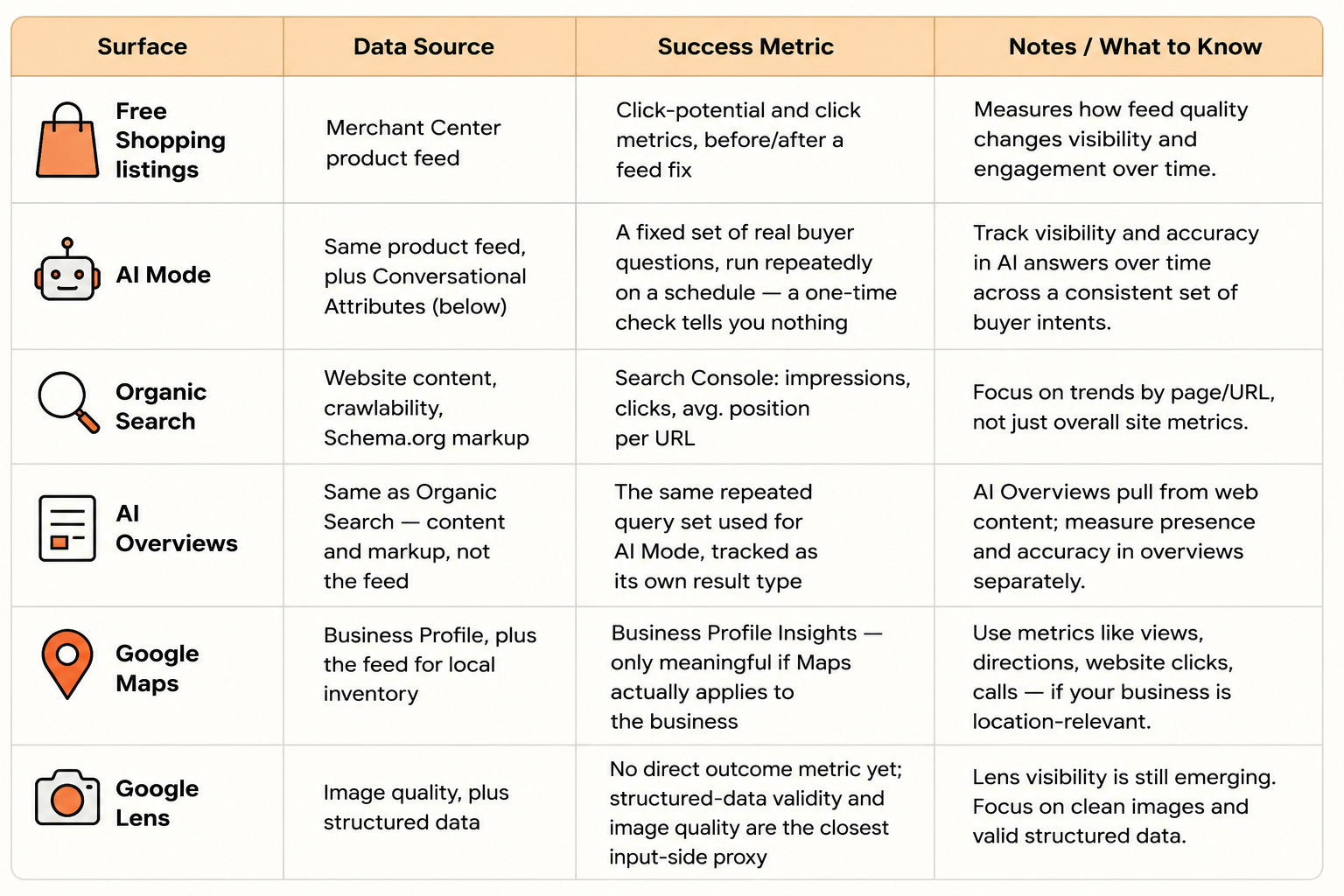
Feed fixes move two surfaces at once (free listings and AI Mode). Content-and-markup fixes move two more (Organic Search and AI Overviews). Maps and Lens run on different inputs entirely, which is exactly why they need their own plan.
The Feed Just Changed Underneath You
Maintaining feed quality isn't just about what you send to Merchant Center — it also depends on how that data reaches Google. Here’s the part most merchants haven’t clocked yet: the Content API for Shopping — the API a lot of legacy feed-management tooling was built on — is being shut down. Google will keep it running through August 18, 2026; after that, calls to the v2.1 endpoint return HTTP 410 Gone (official Google Merchant Center notice). The replacement, Merchant API, went generally available in July 2025, and its own beta version (v1beta) was already discontinued on February 28, 2026 (official Merchant API release notes).
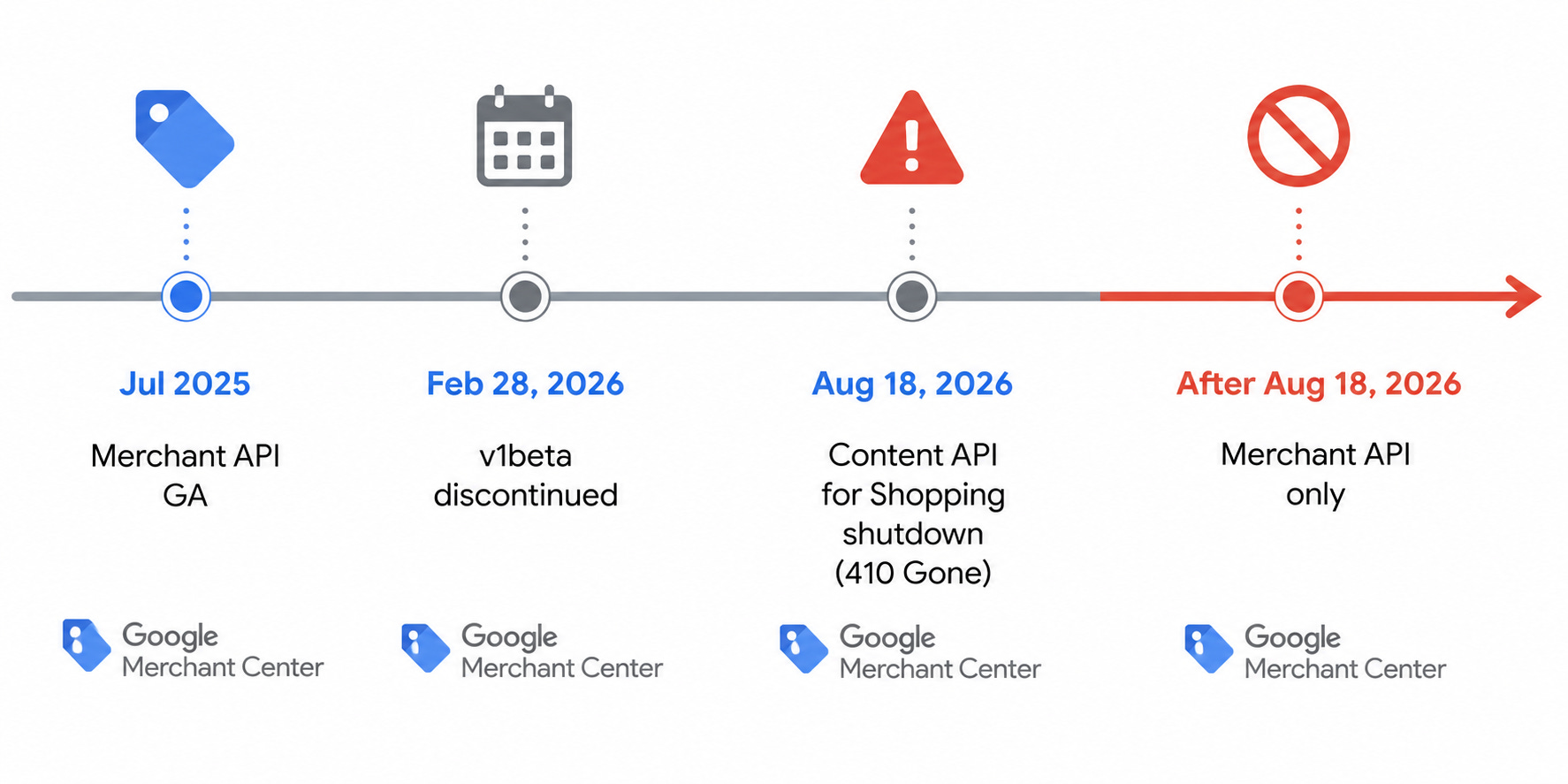
If your feed tooling (or your agency’s) hasn’t migrated, you won’t find out gracefully. You’ll find out when your feed silently stops updating and nobody notices for two weeks.
Conversational Attributes
At Google Marketing Live 2026, Google added six optional Merchant Center fields so AI surfaces like AI Mode and Gemini can answer plain-language questions instead of matching keywords: Question and Answer, Document Link, Related Product, Item Group Title, Variant Option, and Popularity Rank. None replace the core feed, and none affect approval status for products that don’t have them — but AI Mode queries tend to run substantially longer than a typical Shopping search (some sources cite roughly three times the length), packed with constraints a standard feed was never designed to answer.
How merchants add these: a supplemental data source, not a feed rewrite. Merchant Center → Data sources → Add supplemental data source → Google Sheets, joined to the primary feed by a matching id column.
Free tool: Product Studio — free AI-powered image and video generation and enhancement, built into every Merchant Center Next account. Access it under Creative Content in the left nav. It removes one of the most common excuses for weak product imagery: budget.
Agency accountability question: What percentage of our Merchant Center feed is actually eligible for AI Mode inclusion today — and if our feed tooling hasn’t migrated off the Content API before August 18, what happens to that eligibility the day it goes dark?
Does This Actually Work?
Theory is useful, but it isn't proof. We wanted to know whether improving eligibility actually changes visibility — not in theory, but on a live storefront. So we took Picolo Tales, a small personalized-children’s-storybook brand, and ran the eligibility work end to end: rebuilt its Merchant Center data, fixed three field-level feed problems, added the six Conversational Attributes above, and tracked what happened across AI Mode, Search Console, Merchant Center, and GA4 against a clean measured baseline.
The results — including what worked, what didn’t move at all, and what Google’s own policy simply doesn’t support — are in the companion piece: “Inside a Merchant Center Transformation”.
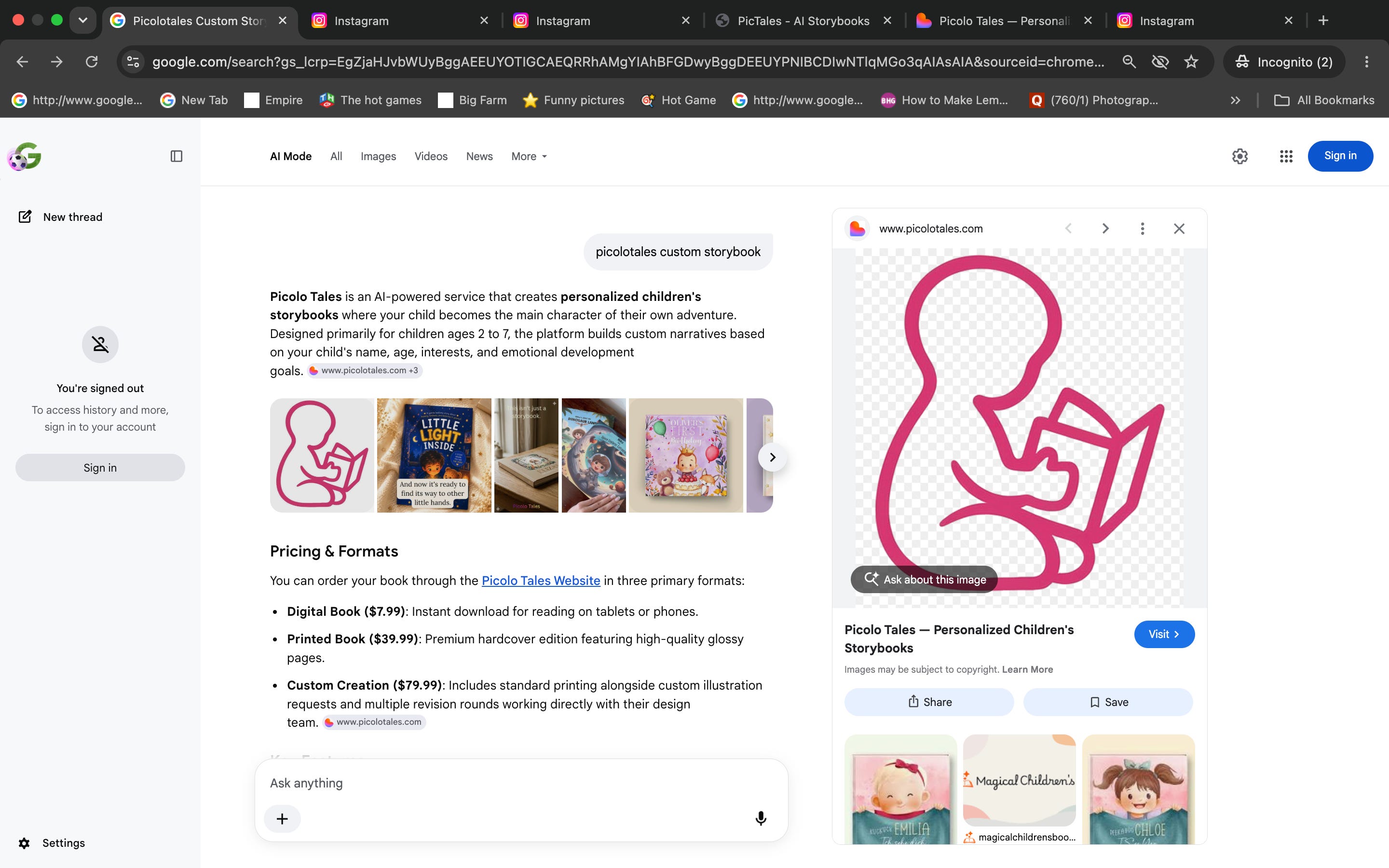
A preview: Google AI Mode citing picolotales.com directly on a branded query, pricing exactly correct — the rest of the story is in the companion piece.
Claims Validation
Content API for Shopping v2.1 returns HTTP 410 Gone after Aug 18, 2026 ✅ Confirmed — official Google source Google Merchant Center Help (official), SearchEngineLand
Merchant API v1beta discontinued Feb 28, 2026 ✅ Confirmed — official Google source Google Merchant API — Latest Updates
Six Conversational Attributes added at Google Marketing Live 2026, optional, don't affect approval status ✅ Confirmed — official Google source ppc.land, Google Merchant Center Help
Product Studio is free for all Merchant Center Next accounts, no per-image fee ✅ Confirmed — official Google source Google Merchant Center Help
Purely online businesses with no physical location and no in-person customer contact are ineligible for a standard Google Business Profile ✅ Confirmed — official Google source Google Business Profile Help — Business eligibility and ownership guidelines
Sources
Google Merchant Center Help — Introducing Merchant API (official): https://support.google.com/merchants/answer/16493611
Google for Developers — Merchant API Latest Updates, incl. v1beta discontinuation (official): https://developers.google.com/merchant/api/latest-updates
Search Engine Land — Google replaces Content API for Shopping with new Merchant API: https://searchengineland.com/google-content-api-shopping-new-merchant-api-460937
ppc.land — 8 Google Merchant Center attributes your feed needs for AI Mode: https://ppc.land/8-google-merchant-center-attributes-your-feed-needs-for-ai-mode/
Google Merchant Center Help — How to use conversational attributes (official): https://support.google.com/merchants/answer/17085370
Google Merchant Center Help — About Product Studio: https://support.google.com/merchants/answer/13708167
Google Business Profile Help — Business eligibility and ownership guidelines (official): https://support.google.com/business/answer/13763036
How does AI search see your store right now?
We run real category queries across ChatGPT, Perplexity, and Google AI Mode, inspect your catalog representations, and send you a plain-language report. Completely organic; we never ask for logins or ad spend.
Request your report
Two fields. A person reviews it and emails you back within 48 hours.