Six Platforms. Thirty Surfaces. One Buyer.
Good ideas travel faster when you share them; forward this to someone who’d find it useful.
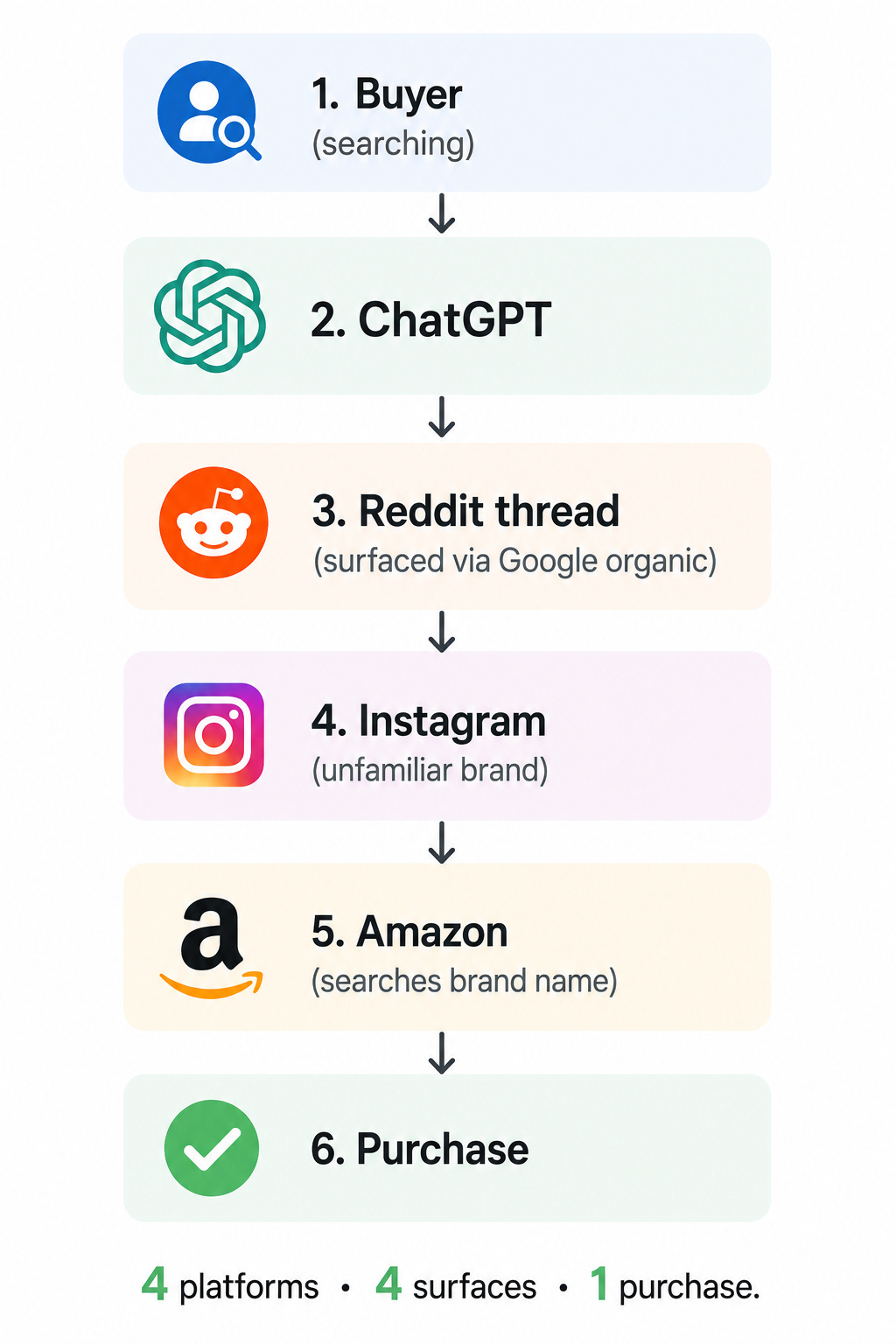
A buyer notices their coffee grinder is failing. They open ChatGPT and ask which grinders are worth buying. They click a Reddit thread that surfaces in Google organic. That evening, they see a product on Instagram from a brand they don’t recognize. The next morning, they open Amazon, search the brand name, and buy.
One purchase. Four platforms. Four surfaces. Zero guarantee the right merchant appeared on any of them.
What used to be a single search-to-purchase journey is now a distributed decision path across six independent distribution systems. The merchant who understands the full map doesn’t just have more options. They have a structural advantage that compounds over time.
Platform vs. Surface
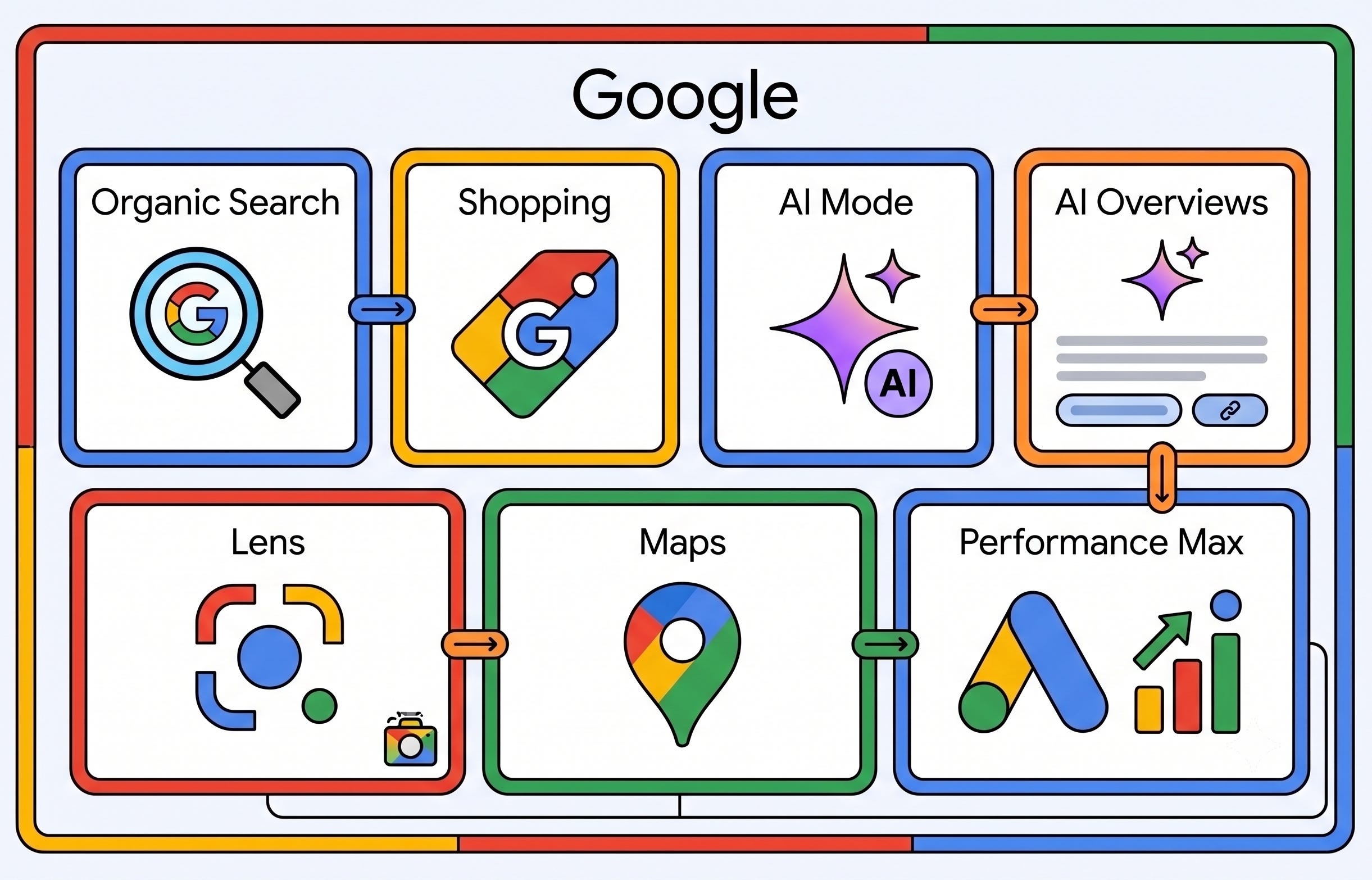
Fact: Google is a platform. Organic search, Shopping, AI Mode, AI Overviews, Lens, Maps, and Performance Max are the surfaces within it — seven distinct places a product can appear or be invisible, each with different eligibility requirements, different buyer intent, and different optimization levers.
Observation: Most merchants treat Google as one thing to manage. It behaves as seven, each with its own rules for whether you exist at all.
Take: If a platform is the shopping mall, surfaces are the individual storefronts, window displays, and endcaps inside it. Your agency may have bought you a billboard outside the mall while your products were never actually placed on the shelves inside.
Before going further: surfaces in this map are distribution endpoints — places a product can appear to a buyer. Eligibility layers are the inputs that determine whether you qualify to appear there. A product feed is not a surface. Schema.org markup is not a surface. They are the infrastructure that determines eligibility across multiple surfaces simultaneously.
Free vs. Paid
Fact: Every platform in this map has free surfaces — visibility earned through data quality and setup, with no ongoing spend required — alongside paid surfaces, where visibility is bought through advertising.
Observation: Most merchants assume their agency manages both equally well. In practice, agencies tend to concentrate on paid, because paid is what generates their fees. The free surfaces are frequently left underserved as a result.
That gap — sourced, not assumed, platform by platform — is what this series maps.
How to Use This Map
Step 1 — Check eligibility. Can your products technically appear on this surface? Feed submitted? Schema markup live? Catalog connected? Eligibility comes before optimization.
Step 2 — Check organic coverage. Where are you appearing for free today, and where are you invisible despite being eligible? Organic gaps are cheaper to close than paid gaps.
Step 3 — Layer paid. Only spend to amplify after you understand where your organic foundations are strong and where they aren’t. Paid spend on top of weak organic coverage is renting visibility rather than building it.
Cross-Platform Leverage — Three Things Worth Knowing Before Reading Further
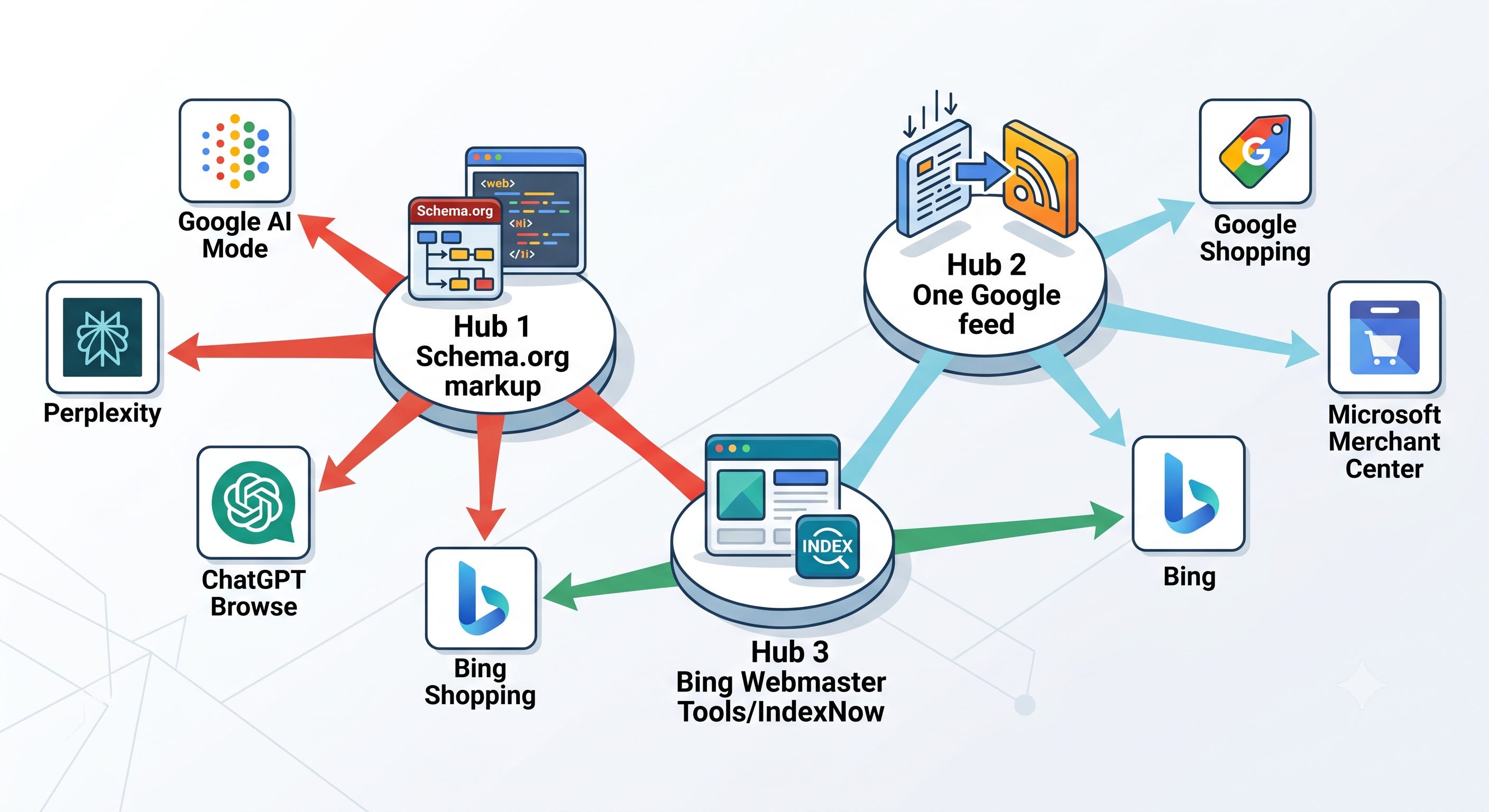
One Schema.org Product markup implementation strengthens the structured data signals used by Google AI Mode, ChatGPT Browse, Perplexity’s crawl indexing, and Bing Shopping — though each platform weighs and combines that signal with its own additional requirements (feeds, merchant programs, citations), so “one implementation” means stronger footing everywhere, not identical treatment everywhere. Most merchants either don’t have it or have it partially implemented with missing fields.
A Google Shopping feed imports directly into Microsoft Merchant Center — the core product data transfers without rebuilding, though it’s worth a review pass on shipping and brand fields before your first sync — and from there powers both Bing’s free listings and Microsoft Shopping Ads.
Bing indexing is one important pathway to Perplexity visibility, since Perplexity supplements its own crawl infrastructure with Bing’s index rather than running a fully independent one. Strong Bing Webmaster Tools setup and IndexNow protocol submission tend to improve presence on both surfaces together.
Take: these three connections are the highest-leverage free actions in this map — meaning the ones most likely to pay off across multiple platforms per hour of effort, based on the mechanics above. Everything else is platform-specific — which is what the rest of this series covers, one platform at a time.
The Six Platforms, at a Glance
Google — 7 surfaces
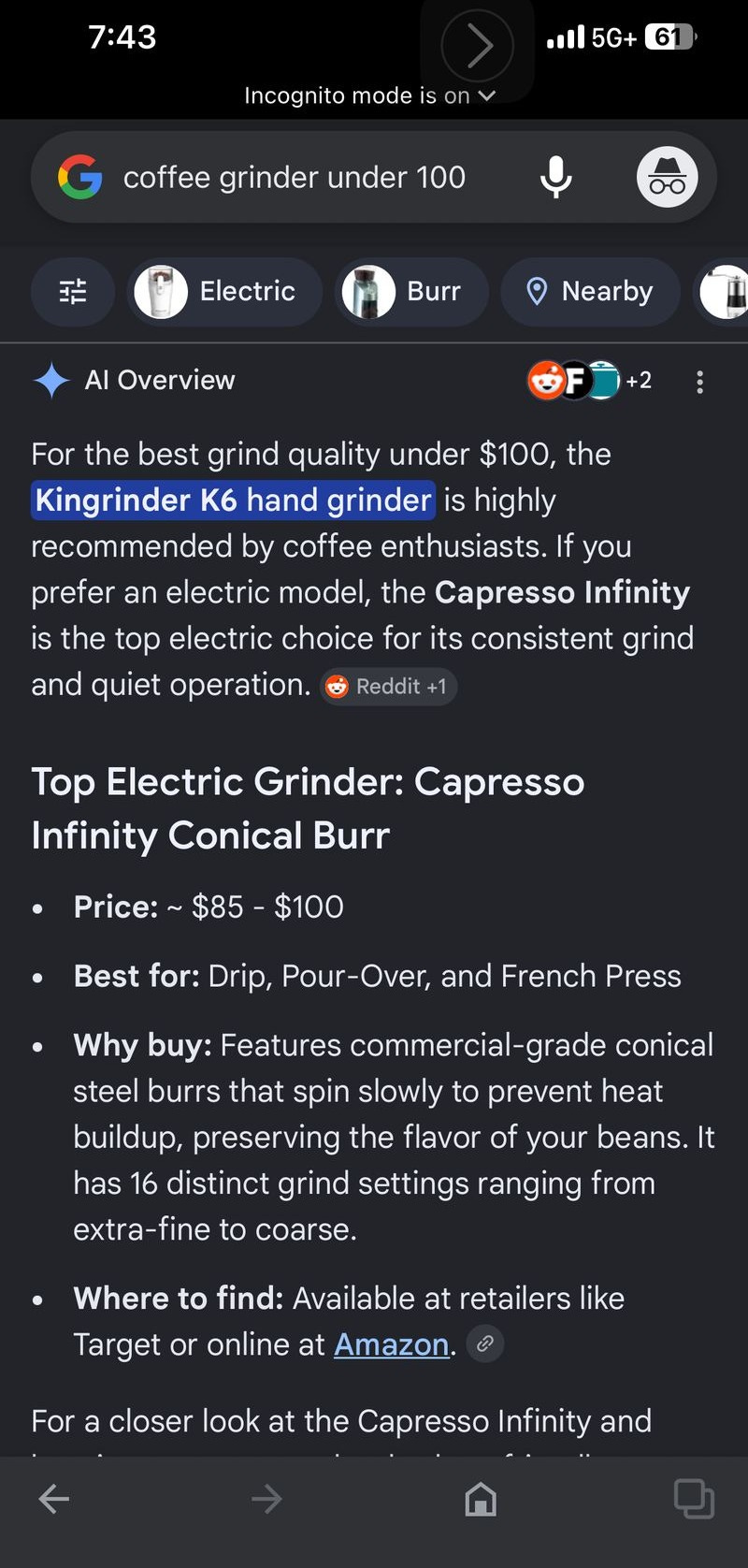
Google AI Overview — informational, cites sources, no product cards.
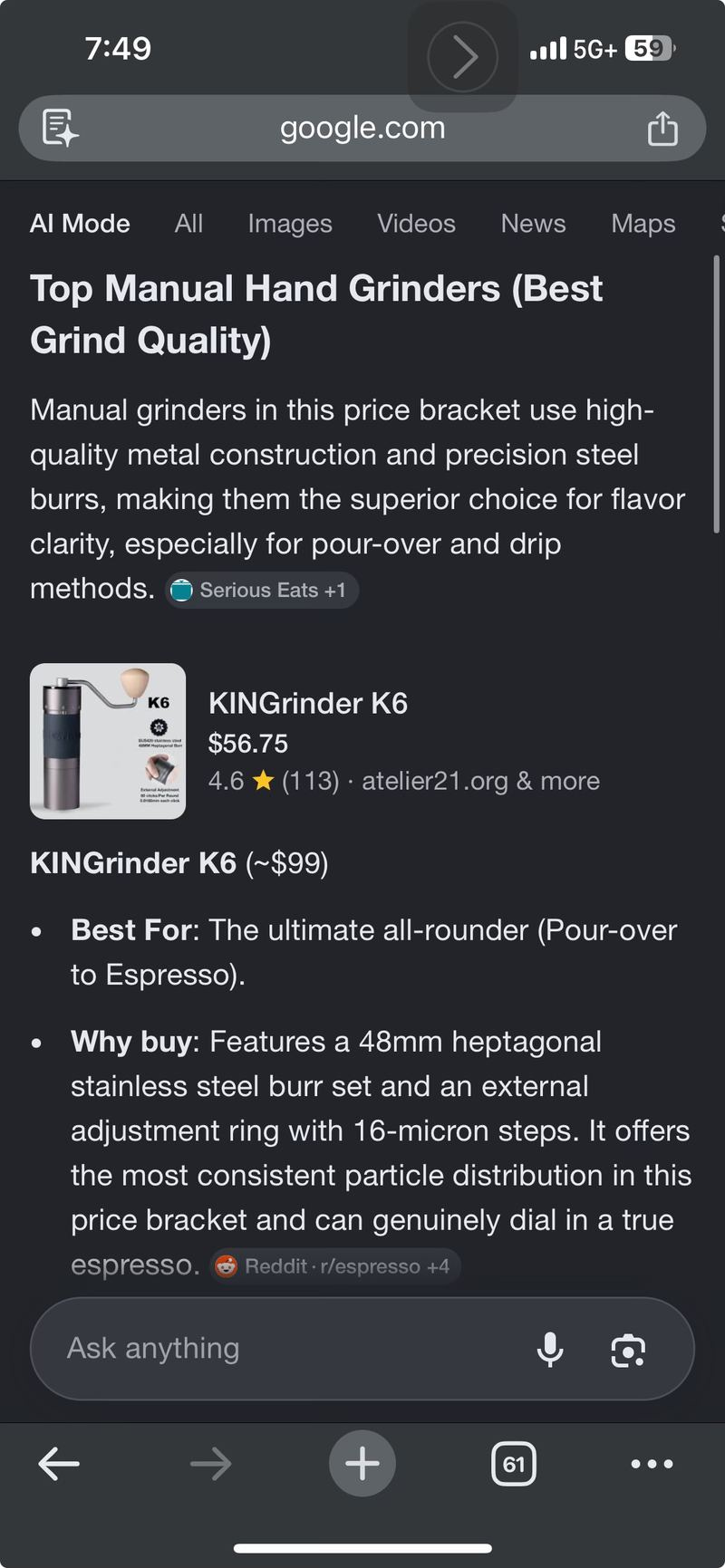
Google AI Mode — structured product cards with image, price, rating, and retailer.
Google Merchant Center has a free listings tier that runs independently of paid Shopping campaigns. It's easy to spend on Performance Max for years without ever checking whether that free layer underneath is actually switched on. Worth noticing above: AI Overview and AI Mode are genuinely different surfaces on the same platform — one summarizes with citations, the other renders buyable product cards. Google gets the full seven-surface treatment in Article No. 3.
Amazon — 6 surfaces
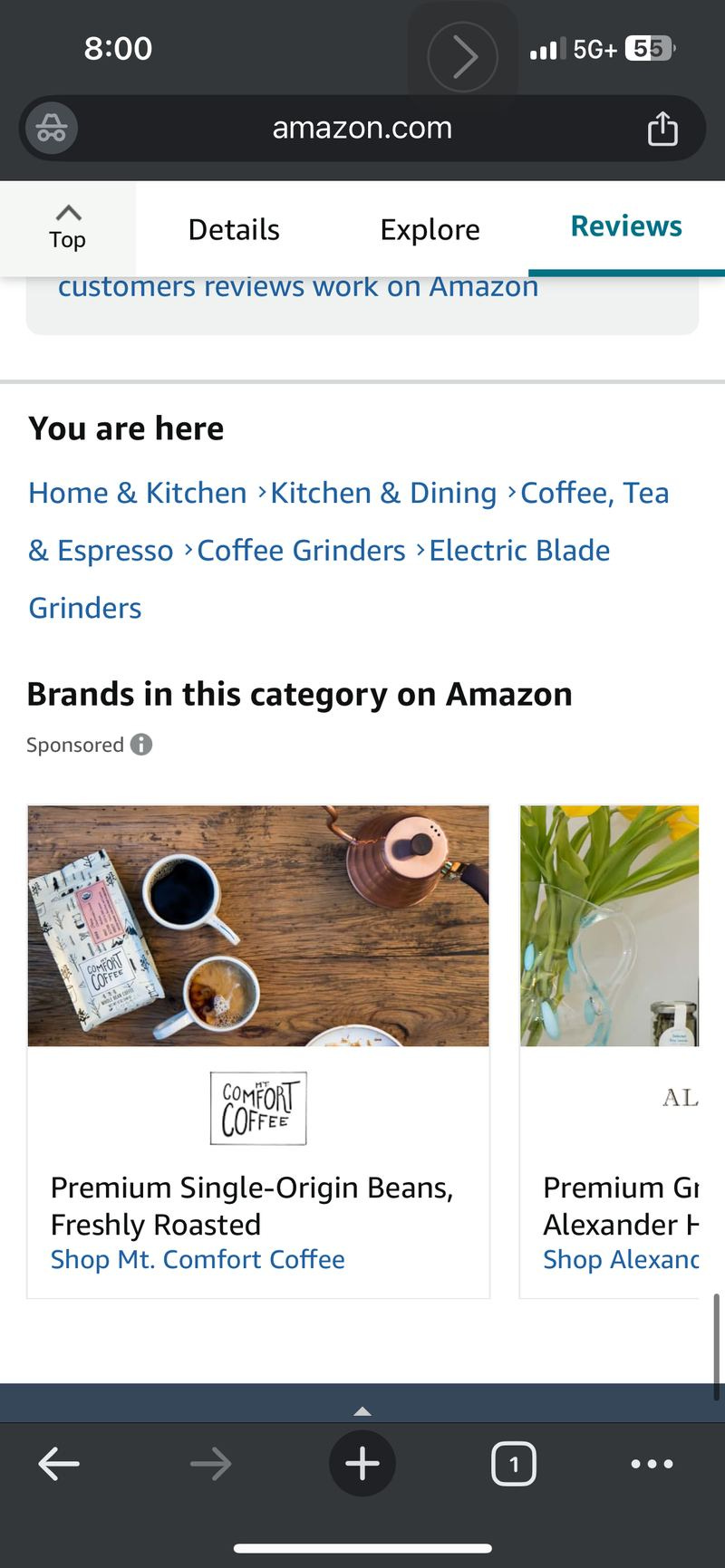
The "Brands in this category" module — logo, headline, and "Shop [Brand]" link — is the Sponsored Brands ad format, which requires Brand Registry enrollment.
Not every "Sponsored" tag on Amazon means the same thing. A plain Sponsored Products tile is open to any professional seller — but the logo-and-headline "Sponsored Brands" placements are gated behind Brand Registry enrollment. Amazon's other five surfaces are covered in Article No. 4.
Meta — 5 surfaces
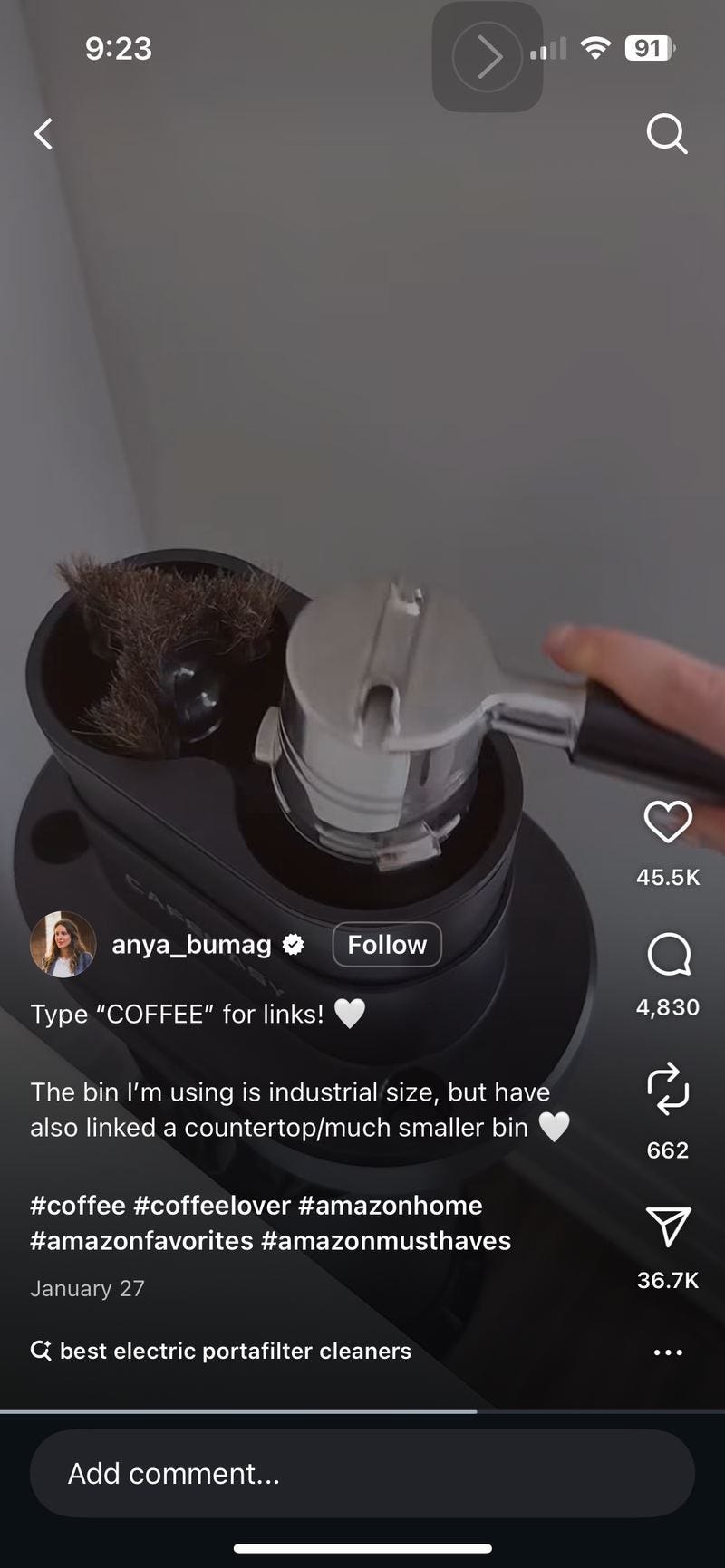
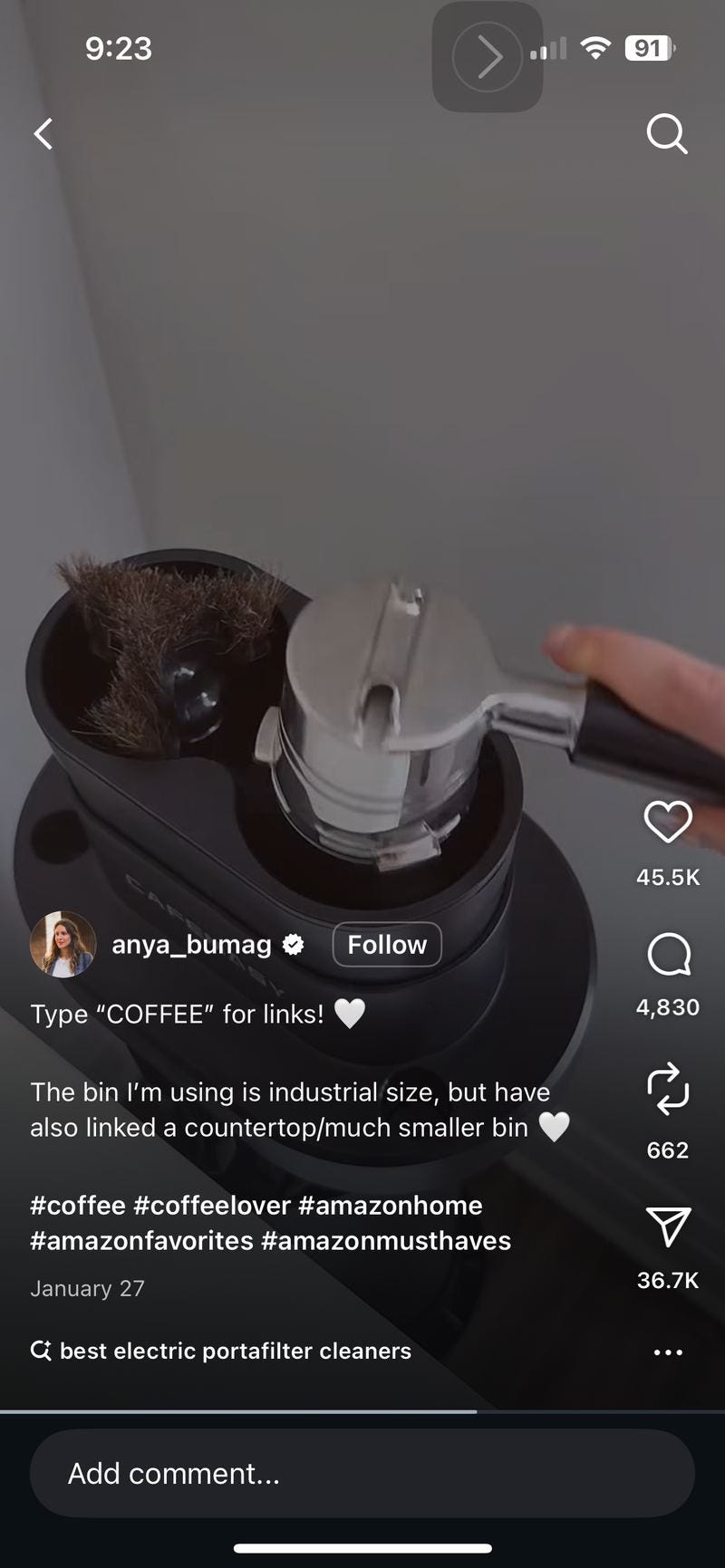
A real Instagram Reel using "type a keyword for the link" instead of the native shopping-bag tag.
Instagram's dedicated Shop tab was removed in 2023, and native in-app checkout was phased out for most US merchants by 2025 — so what shows up on real posts today is often a plain caption link or a "type a keyword for the link" prompt, not the shopping-bag tag most guides still describe. The mechanic changed; the point about an underused free surface still holds, it's just a different tactic now. More on Meta's current mechanics in Article No. 6.
Microsoft — 5 surfaces
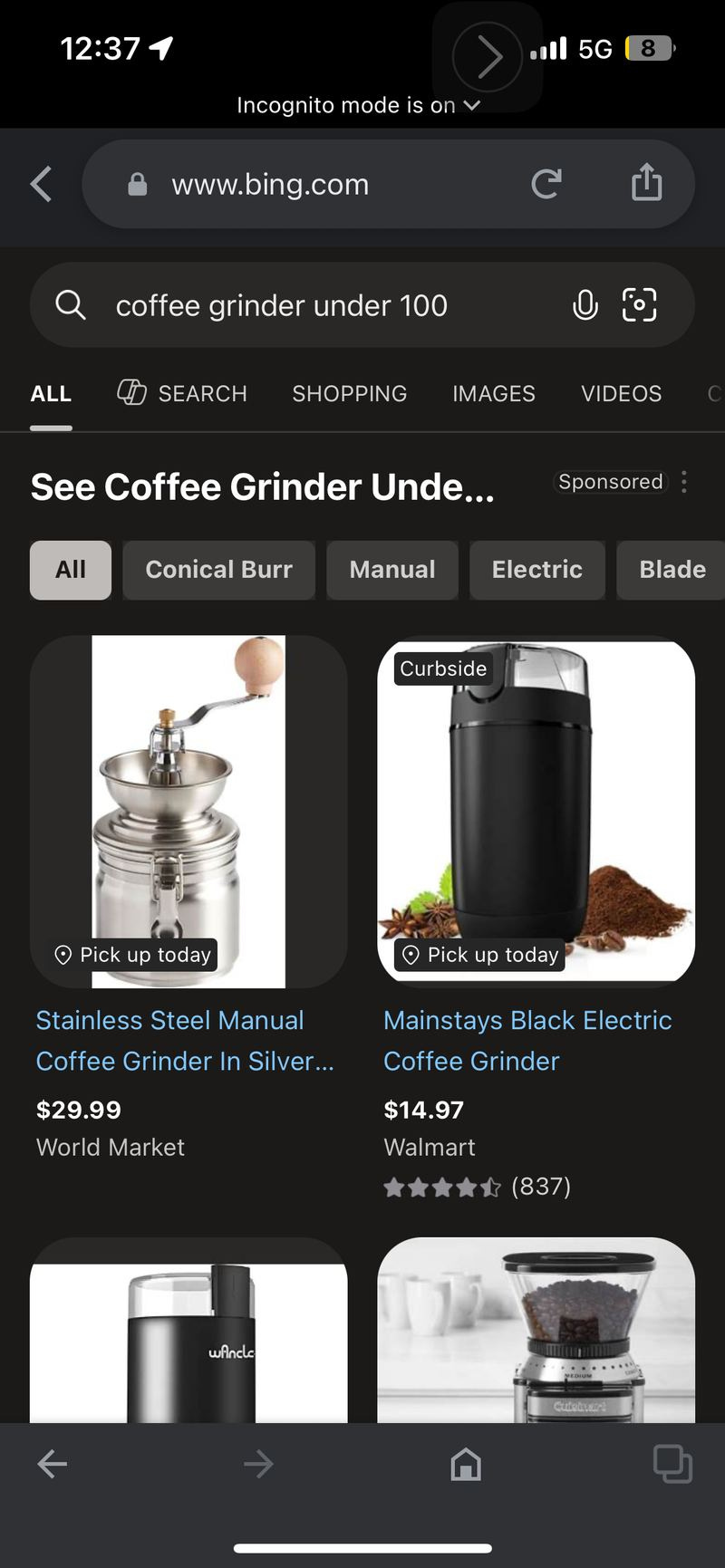
Bing's Shopping carousel, explicitly labeled "Sponsored," embedded directly in the main results page.
Bing mixes a paid shopping carousel and text ads directly into its main results page — both explicitly labeled "Sponsored" — alongside organic listings from review sites underneath. Most merchants never check what their catalog looks like on Bing at all, paid or free. Article No. 7 walks through Microsoft's five surfaces in full.
ChatGPT — 4 surfaces
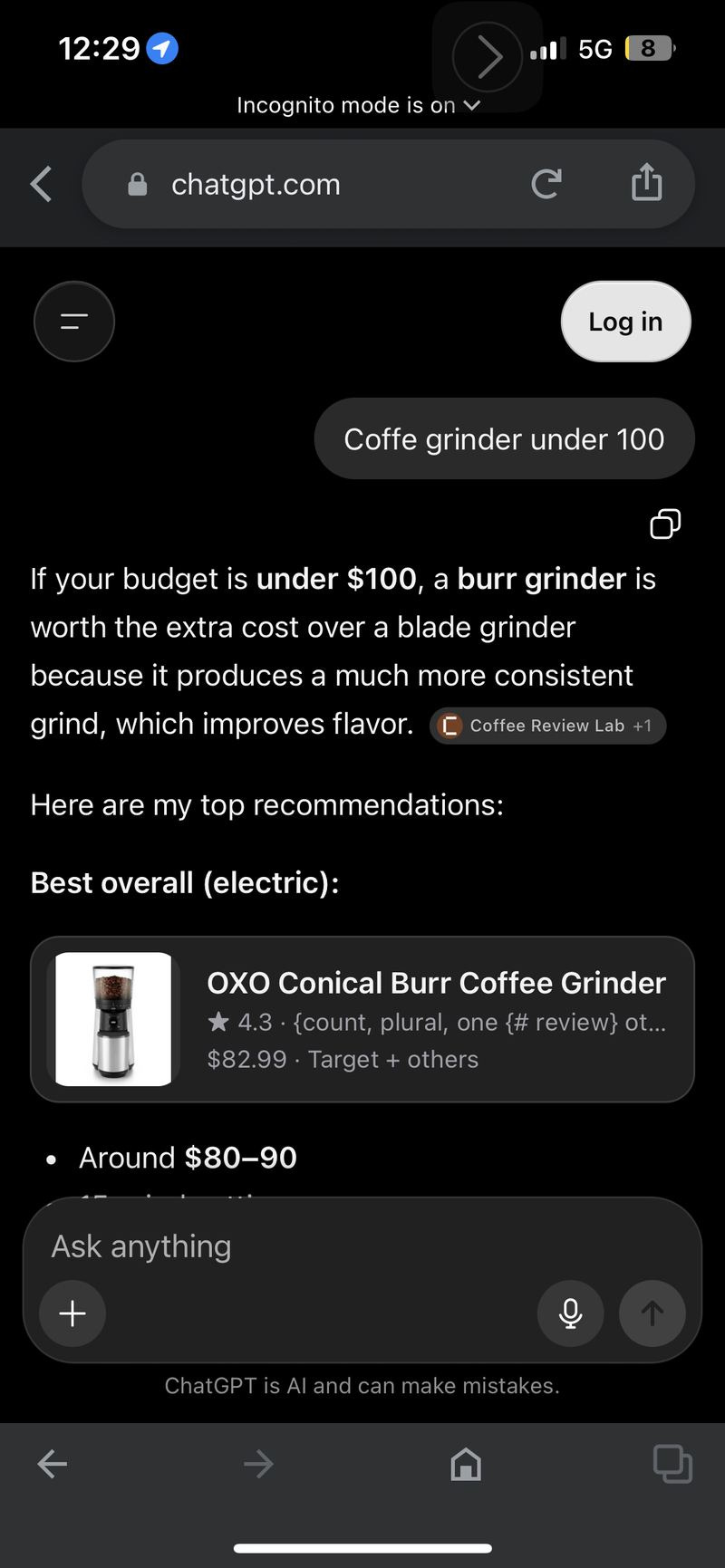
A real ChatGPT Product Card — image, price, retailer, and rating.
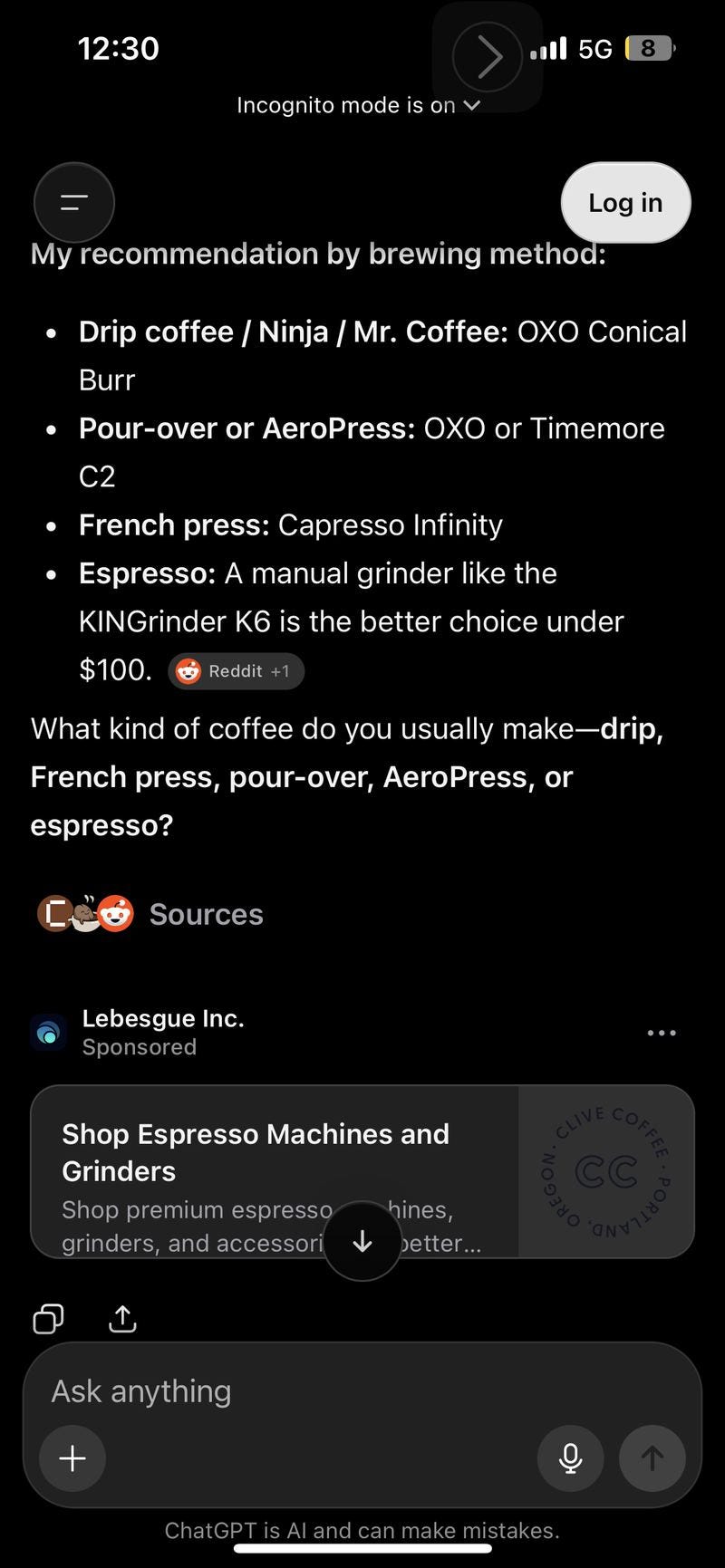
A labeled Sponsored placement (Clive Coffee) appearing in the same response as organic Product Cards — free and paid, side by side.
Paid advertising on ChatGPT opened to every US business in May 2026. Free, organic product placement is on a different track — it still requires an application, and that application has to come from someone at the merchant company itself, not an agency. The full paid-vs-organic asymmetry is unpacked in Article No. 5.
Perplexity — 3 surfaces
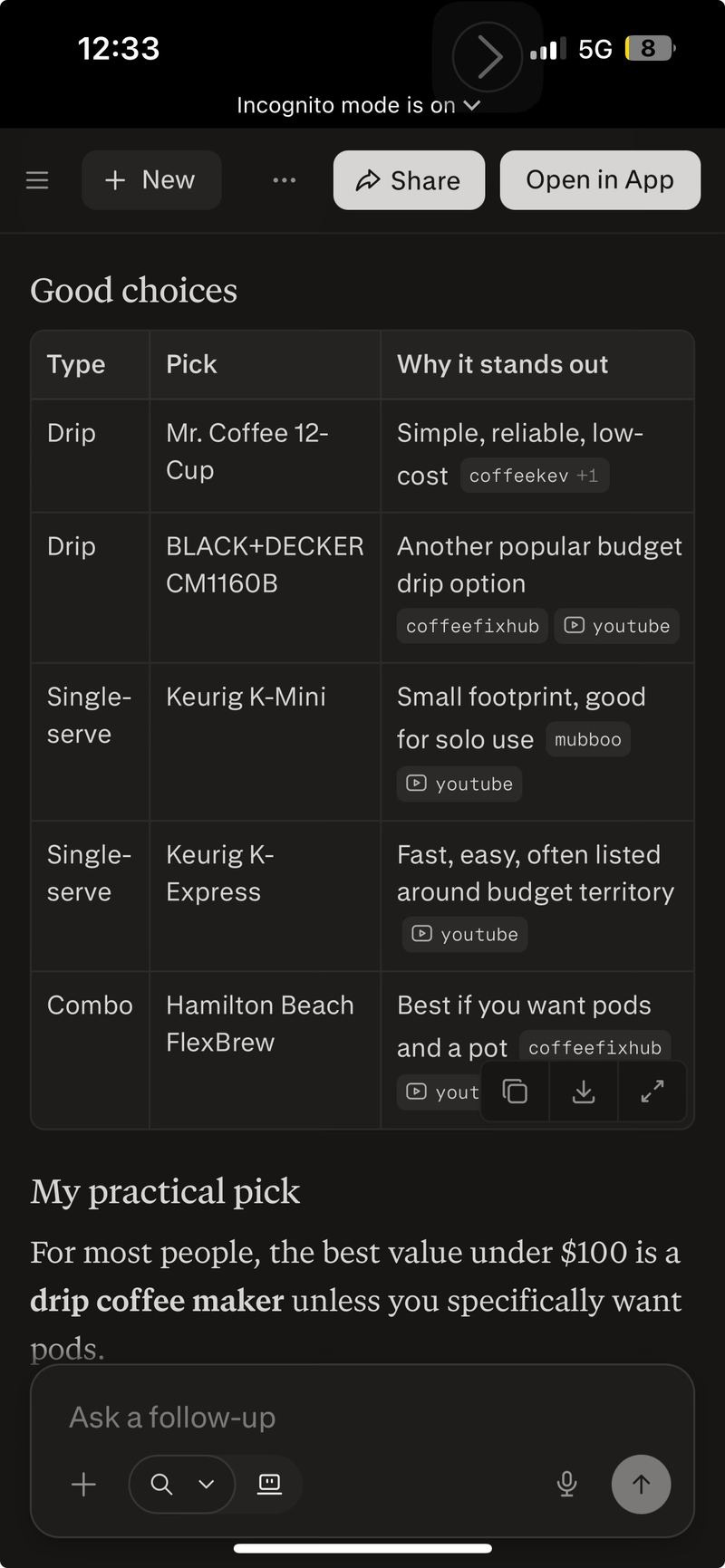
A real Perplexity response — a sourced comparison table citing blogs and video reviews, not a transactional product card.
Perplexity doesn’t run its own separate search index — it draws on Bing’s. The same free setup that helps a product’s content get crawled and cited on Bing tends to help it get cited here too. Perplexity’s three surfaces get the full treatment in Article No. 8.
7 + 6 + 5 + 5 + 4 + 3. That’s exactly 30 surfaces — and the count only holds still until the next platform update.
What’s Universal — and What Isn’t
What every platform shares:
A structured data requirement. Every platform needs some form of structured product data to show a product properly. The format differs by platform. The underlying need — clean, machine-readable facts about price, availability, and identity — is the same everywhere.
Some form of unpaid visibility alongside paid. Every platform in this map offers a way to appear without buying ads — but “free” isn’t identical everywhere. Amazon’s organic listings require being an approved seller. ChatGPT’s Product Cards require an application. Meta requires a connected catalog. The access cost varies even when the dollar cost doesn’t.
Paid amplifies organic, it doesn’t replace it. On every platform, advertising performs better on top of a strong organic foundation than it does compensating for a weak one.
Three assumptions worth double-checking, because they’re not universally true:
“My Google feed works everywhere.” Partly true — that primary commerce feed ports to Microsoft with minor adjustments, and is broadly similar in structure to Meta’s and ChatGPT’s feed formats. It does not work on Amazon, which requires its own separate setup.
“More SKUs means more visibility.” True on Google and Microsoft, where a bigger, well-structured catalog tends to earn more placements. Not necessarily true on Amazon, ChatGPT, or Perplexity, where relevance and data quality per product matter more than catalog size.
“AI surfaces are basically one channel.” They’re not. Google AI Mode, ChatGPT, Perplexity, Amazon’s Alexa, and Microsoft Copilot each read data differently and answer differently — treating them as one thing means optimizing for none of them well.
The one thing that's genuinely universal — and still commonly gets it wrong: Schema.org Product markup. A 2026 audit of 5,000 sites found 73% of ecommerce pages have basic Product schema in place — so it's not that merchants skip it. The problem is completeness: only 19% include the specific data (price and availability, correctly structured) that Google requires to actually show a rich result, and only about 8% pass full validation without errors. Most merchants have taken the first step and stopped short of the part that makes it work.
The Master Table
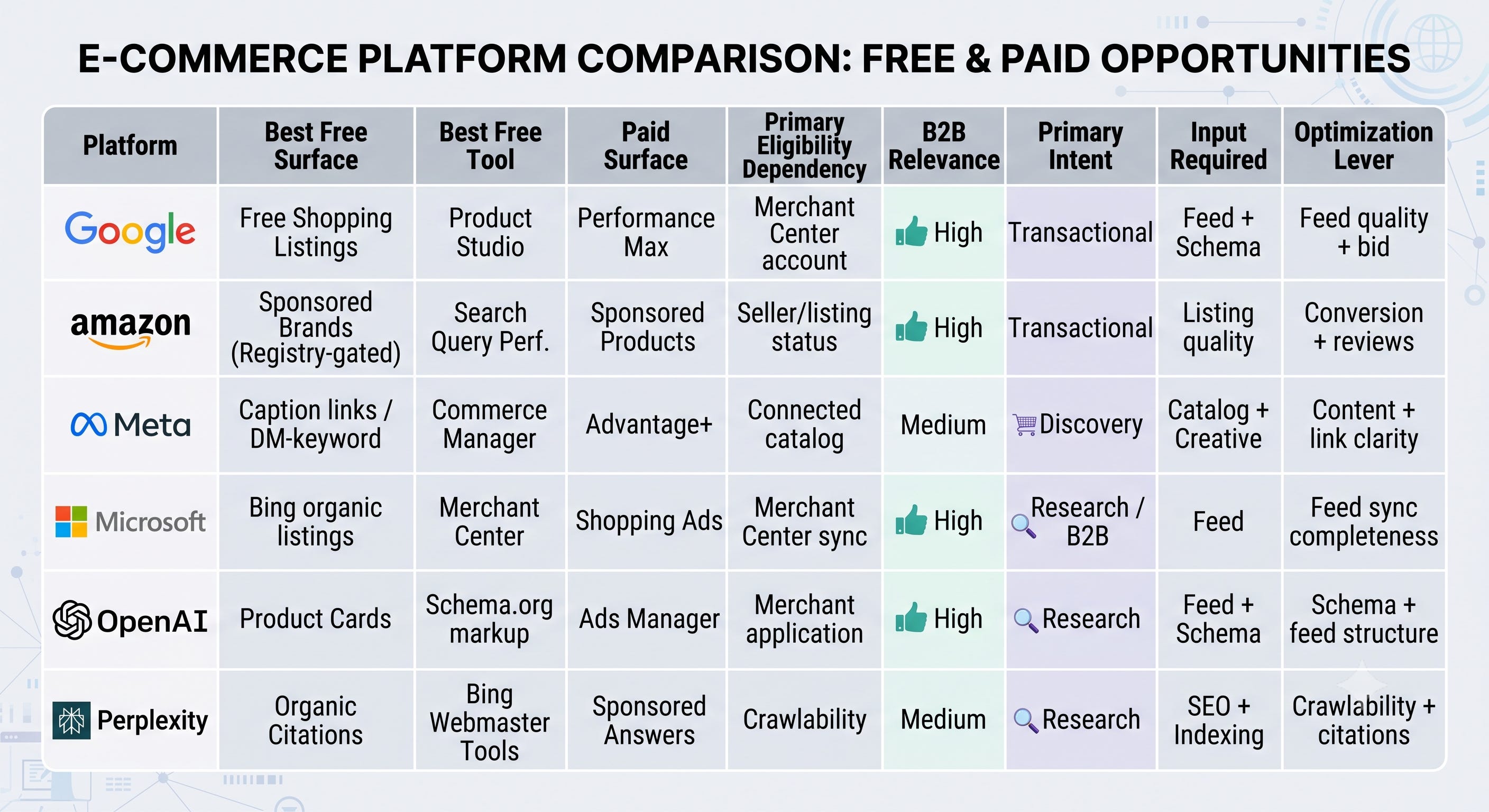
Six Questions Every Ecommerce Leader Should Ask Their Agency Tomorrow Morning
Copy and paste these into an email for your next agency sync.
Google: What exact percentage of our total Google impression share came from free Shopping listings versus paid Performance Max last quarter — and what would it cost to close that gap with feed quality rather than spend?
Amazon: What was our organic search conversion rate versus our Sponsored Products conversion rate last quarter, per the Search Query Performance report — and what would it take to close that gap with listing quality?
Meta: How many of our organic Instagram posts included a working product link — caption link, DM-keyword, or native tag — last quarter, and what was our Facebook Shop revenue excluding Advantage+ campaigns?
Microsoft: Is our product catalog currently live and syncing in Microsoft Merchant Center — yes or no — and how many of our SKUs are appearing in Bing’s free Shopping listings today?
ChatGPT: Has [merchant contact], by name, personally submitted the Product Card application at chatgpt.com/merchants? This is one your agency cannot do for you — someone at the company has to apply directly.
Perplexity: Is our site submitting URLs via IndexNow — yes or no — and have we applied to the Perplexity merchant program?
Take: in 2026, visibility is not a marketing problem. It is a systems problem. And most systems are incomplete.
Increasingly, products lose not because they’re worse, but because they never became visible where the buyer was making the decision.
The New Shelf · Platform Series · No. 2
Series list:
No. 1 — Product Discovery Just Left the Marketplace (published)
No. 2 — Six Platforms. Thirty Surfaces. One Buyer. (this article)
No. 3 — Google: Seven Surfaces, One Feed
No. 4 — Amazon: The Full Picture
No. 5 — ChatGPT / OpenAI
No. 6 — Meta
No. 7 — Microsoft
No. 8 — Perplexity
If this map was useful, send it to one person managing an ecommerce catalog.
Sources & Verification
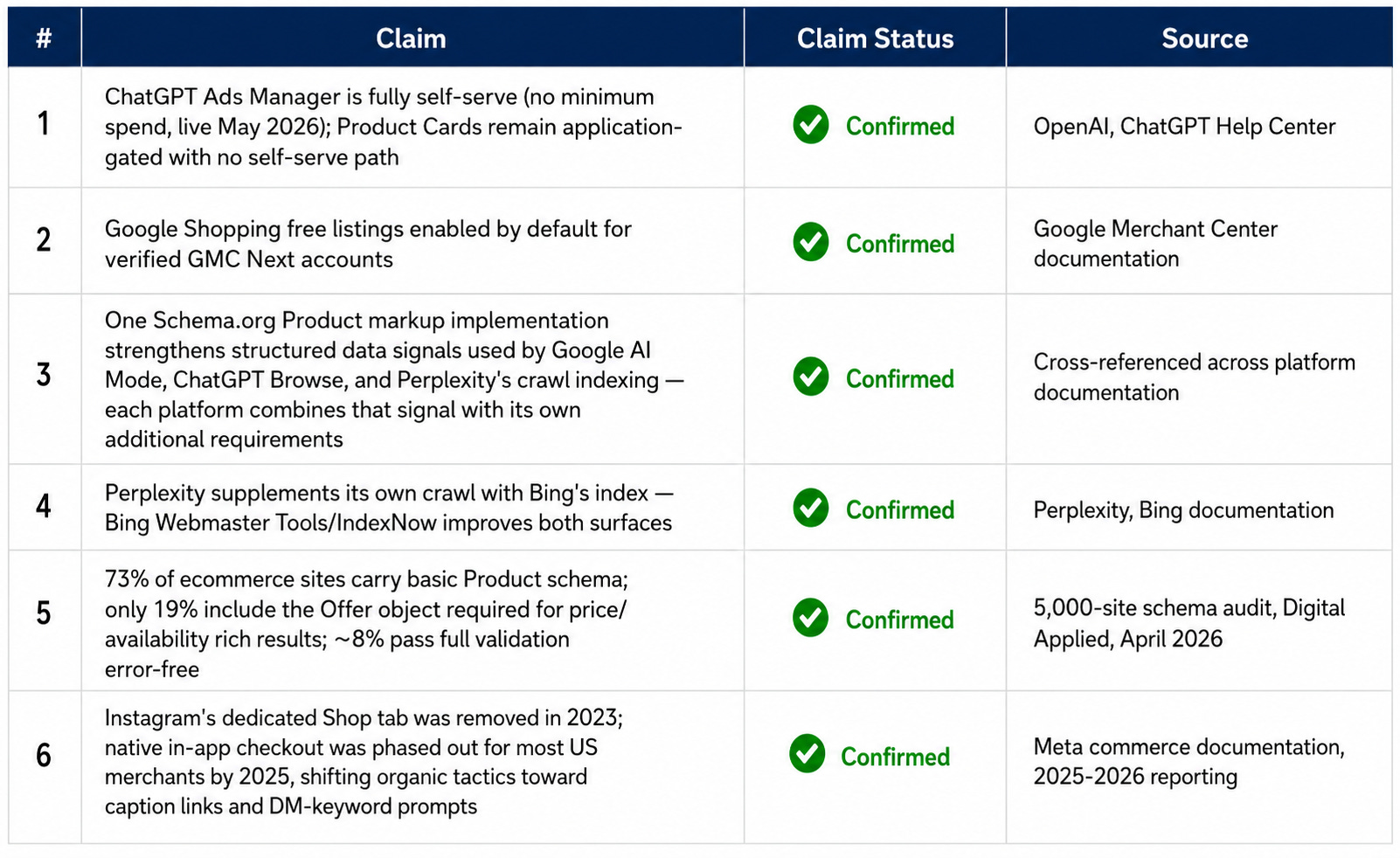
Platform-specific claims — Microsoft feed import mechanics, Amazon Alexa/Rufus transition, Shopify Agentic Storefronts rollout, and others — are sourced in full within each platform’s dedicated article.
Image Credits
All platform screenshots captured directly by the author, incognito/fresh browser sessions, using the query “coffee grinder under 100” across each platform, captured July 2026 — dates should be updated to match actual publish timeline.
How does AI search see your store right now?
We run real category queries across ChatGPT, Perplexity, and Google AI Mode, inspect your catalog representations, and send you a plain-language report. Completely organic; we never ask for logins or ad spend.
Request your report
Two fields. A person reviews it and emails you back within 48 hours.