We're Optimizing a Tattoo Aftercare Brand for AI Citations. The First 14 Days Were Surprisingly Mixed.
Good ideas travel faster when you share them; forward this to someone who’d find it useful.
Flaunt Your Ink (FYI) is the #1 bestseller in tattoo aftercare on Amazon India. They sell healing balms, sunscreen sticks, and moisturizers for tattooed skin through their Shopify store and Amazon.
Across ChatGPT, Perplexity, and Google AI Mode — on more than 40 category-level buyer queries we tested in June — their blog content wasn’t being cited once.
FYI runs paid campaigns for product sales. Their blog has no paid promotion behind it — every impression, session, and citation it earns has to come organically. Quick definition: when we say “AI citation,” we mean the platform explicitly names, links to, or paraphrases an FYI article as a source — not a passing brand mention, not a shopping feed listing.
We made 10 changes across 9 URLs. Measured for the first 14 days. The results challenged our own assumptions.
The hypothesis
If content that AI platforms cite has identifiable structural characteristics, reproducing those structures should make FYI’s blog easier to discover, interpret, and eventually cite.
We expected the first signal to appear in Google Search Console — are these pages becoming more visible in search? The actual AI citation test was always the 30-day measurement, not the early checkpoint — everything here is the leading indicator.
What we found before changing anything
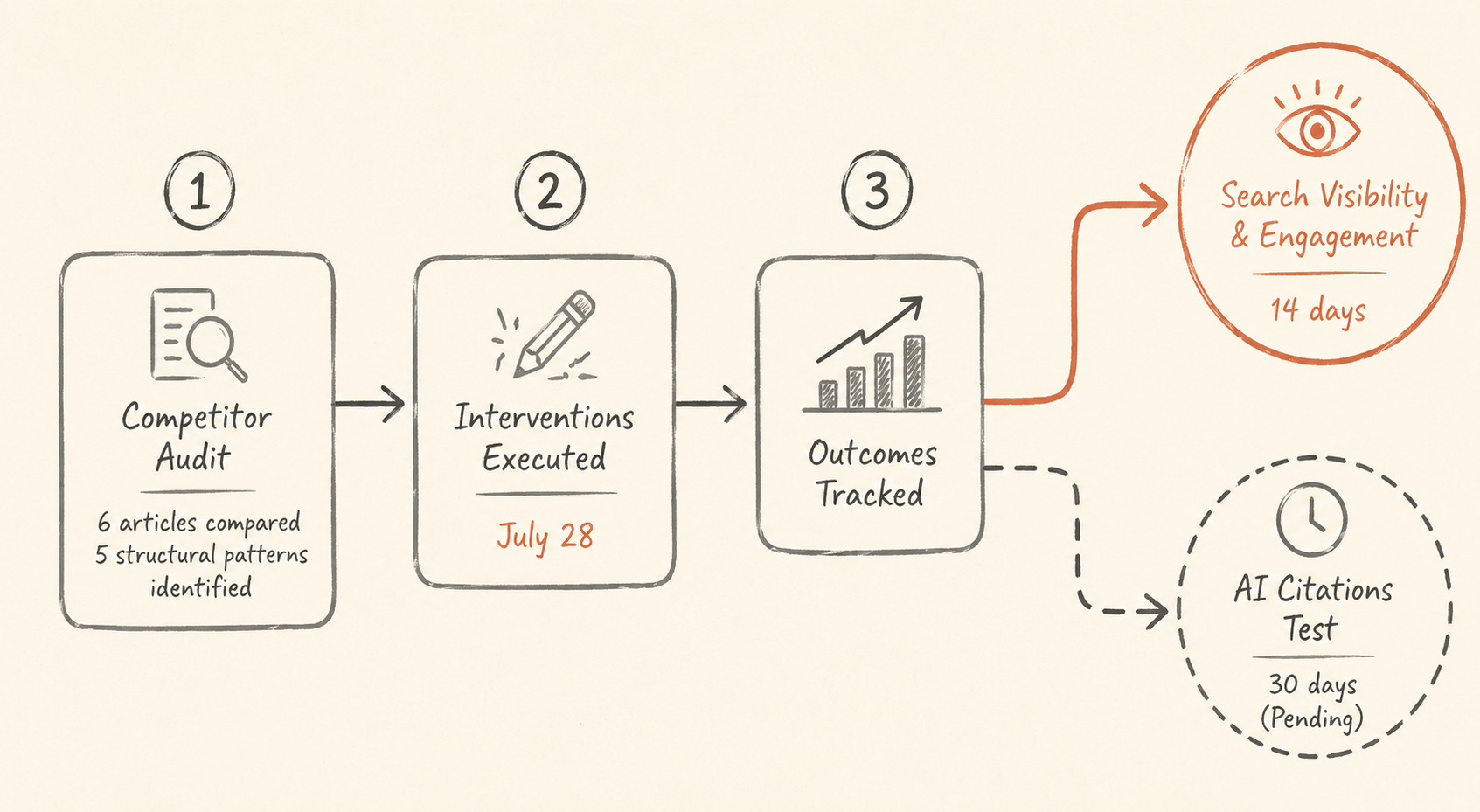
We pulled six articles — three from FYI’s blog, three from the top-cited competitor in tattoo aftercare. We're not naming the competitor; FYI gave us permission to share their story, the competitor didn't. We work with FYI directly on their AI visibility and catalog work — this isn't outside analysis, it's a live engagement we're reporting from.
The FYI articles covered the same topics where the competitor was earning citations. The competitor articles were the specific pages being cited. Same topics, different structural treatment.
We compared all six across seven structural features. Two additional features — FAQ blocks and sourcing lists — were isolated separately for testing rather than folded into the blanket comparison.
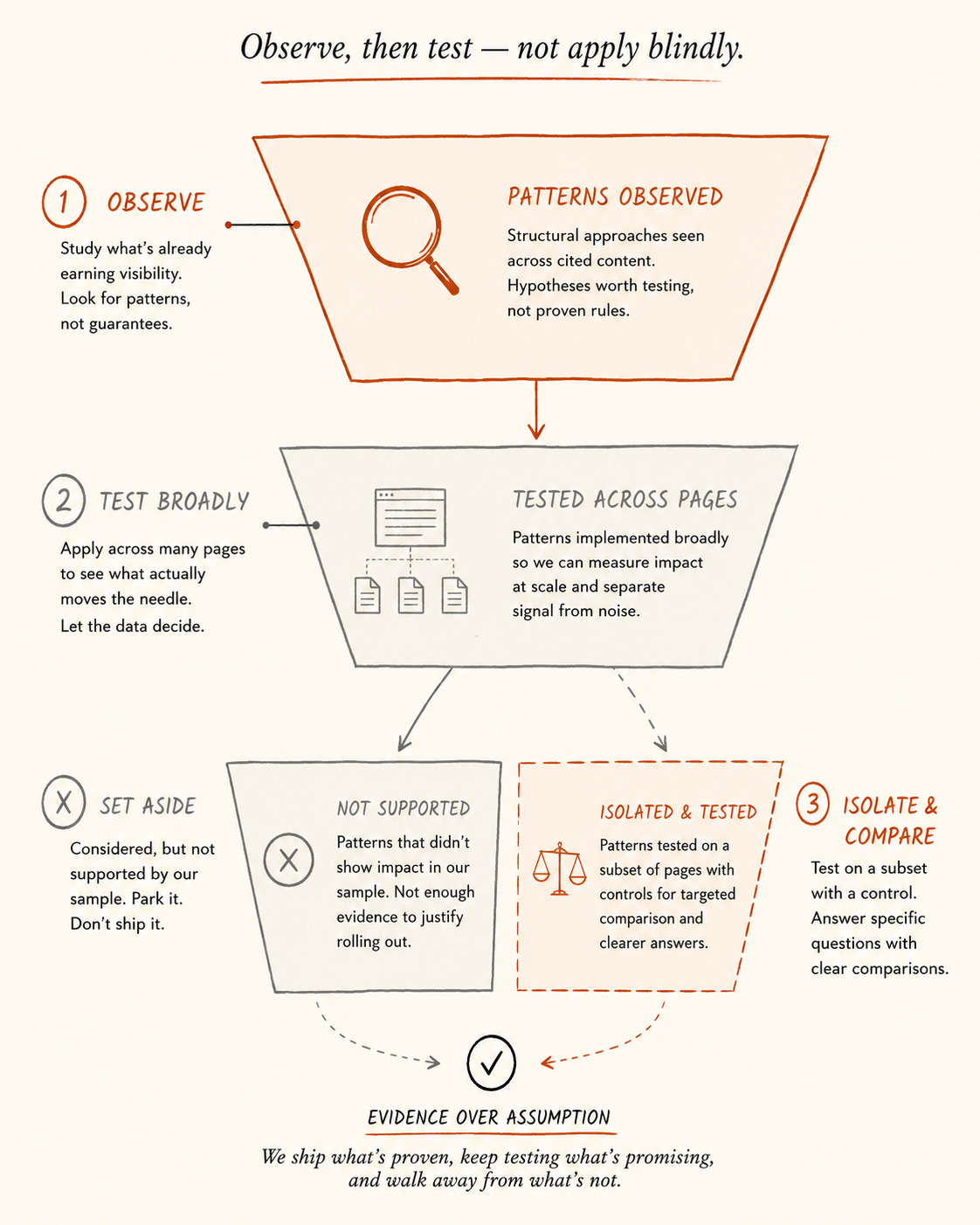
Five recurring patterns appeared in all three competitor articles and none of FYI’s: title-slug alignment, bold-label bullets, numbered macro-structure, India-specific entity density, and a tag footer with cross-links. These are correlations observed in a small sample, not proven citation factors — the experiment exists to test whether reproducing them actually changes visibility, not to claim we’d found five rules.
Two features the sample didn’t support: answer-first openings and TL;DR boxes. Zero of six cited articles used either. Dropped.
Two features we isolated rather than applied everywhere: FAQ blocks (added to one article) and sourcing lists (added to two, withheld from two).
The working hypothesis: useful information in FYI’s blog was embedded in prose rather than organized the way we observed in the cited competitor content. The experiment tests whether changing that organization changes visibility.
The 10 changes
Ten changes, four intervention types, nine URLs. All executed July 28 via Shopify’s admin API.
Technical (2): a URL swap correcting a slug mismatch on “Why Do Tattoos Fade,” and a duplicate article unpublished and redirected into the long-term care piece.
Content expansion (2): "Why Do Tattoos Fade" expanded from 325 to ~950 words with a new cause added, an FAQ section, and a restructure — the most aggressive compound change in the set, four variables on one page. “Sunscreen for Tattoos” expanded from 292 to ~800 words, with a promotional paragraph removed.
New content (2): two articles commissioned from scratch on topics the competitor was cited for and FYI had zero coverage of — sensitive skin aftercare and colour vibrancy, both India-specific.
Structural restructures (4): four existing articles reorganized into numbered formats with bold-label bullets and cross-links, substance unchanged. Sourcing lists went on two of the four; the other two got nothing added beyond structure, to isolate the effect.
We deliberately didn’t apply every apparent best practice to every page. That’s the only way the 30-day AI citation re-run can tell us which intervention actually mattered.
The first 14 days
We compared a 13-day baseline equivalent against the 13-day post-change window (July 29 – August 11), normalized to the same length.
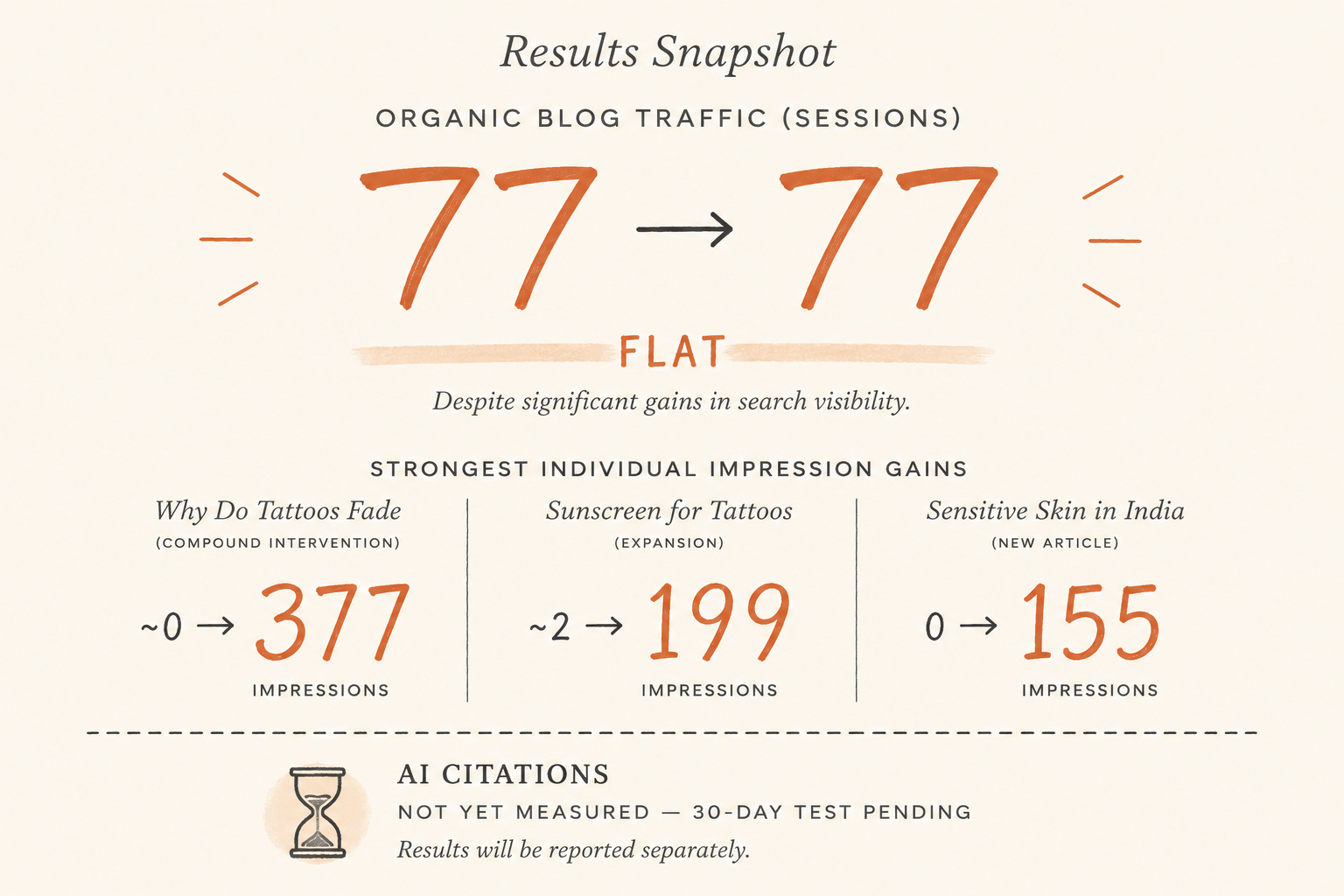
Search visibility increased on several changed pages. Blog traffic didn’t follow — not yet.
More people are seeing FYI’s articles in search results. The same number are clicking through. We think that’s a click-through problem, but we can’t fully rule out other causes — different search terms bringing people in, where the pages rank, or just a more crowded results page pulling attention elsewhere.
And the interventions we expected to matter most — the structural ones, closest in spirit to what we thought AI citation required — didn't produce the clearest signal. Content expansion did. That's the surprise worth sitting with before the page-by-page detail.
What happened, page by page
The cleanest content-depth signal: “Sunscreen for Tattoos.” One variable changed — word count, 292 to 800. Impressions went from roughly 2 to 199.
The strongest compound signal: “Why Do Tattoos Fade.” Four changes at once — URL, depth, FAQ, structure. Impressions went from near-zero to 377. We can’t say which variable did the work. Biggest absolute gain in the experiment, murkiest attribution.
The new articles. Sensitive Skin: 155 impressions on a topic FYI hadn’t prioritized. Colour Vibrancy: smaller volume (19 impressions) but the strongest average position of any new page, at 5.8. Gap analysis surfaced real visibility opportunity, not just taxonomic completeness.
The structural changes, more precisely. Only two of the four restructured pages were single-variable: Summer Care and the coconut oil guide got structure and nothing else. Long-Term Care and the first tattoo guide also got a sourcing list — a second variable — so they aren’t clean structure-only tests.
Coconut oil, the cleanest single-variable test here, held position 9.2 across every checkpoint. Flat — no signal. Summer Care moved on impressions but softened on position — mixed, not a clean win.
The two structure-plus-sources pages produced the most interesting numbers in the whole section. Long-Term Care's impressions rose from 129 to 347 — a gain of 218. Sunscreen's gain, by comparison, was 197 (from roughly 2 to 199). Long-Term Care's raw gain is larger. The first tattoo guide held impressions flat but nearly doubled its click-through rate, from 0% to 2.52% — the best CTR gain of the experiment.
Both are real, positive results, but neither isolates structure from sourcing — so "content depth beat structure" is a claim about the cleanest evidence, not the biggest number. That doesn't rule out structure mattering for AI citation specifically, since the mechanisms may differ from Google's — the 30-day test could tell a different story.
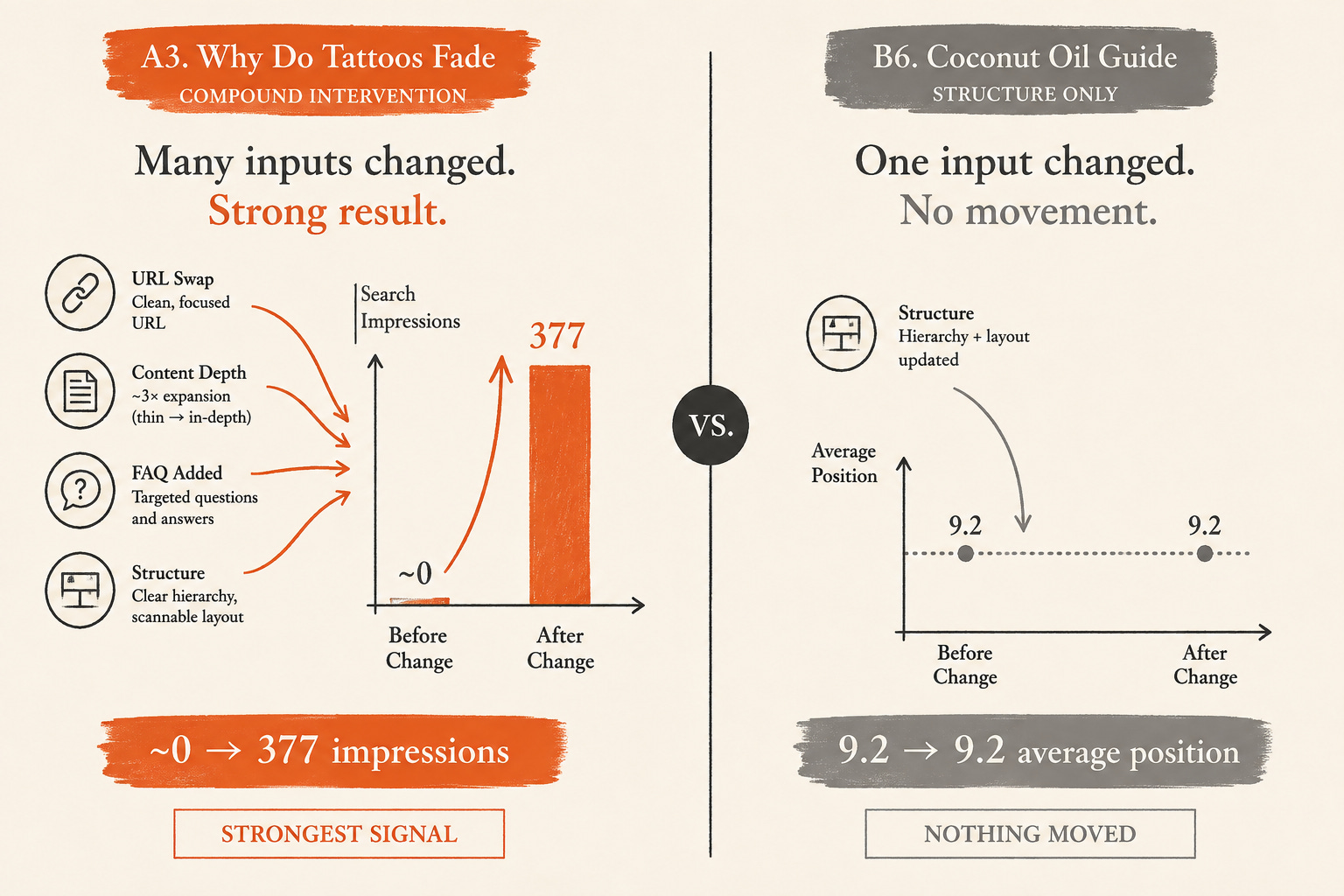
The full results
The table below is the audit trail; the narrative above is the interpretation.
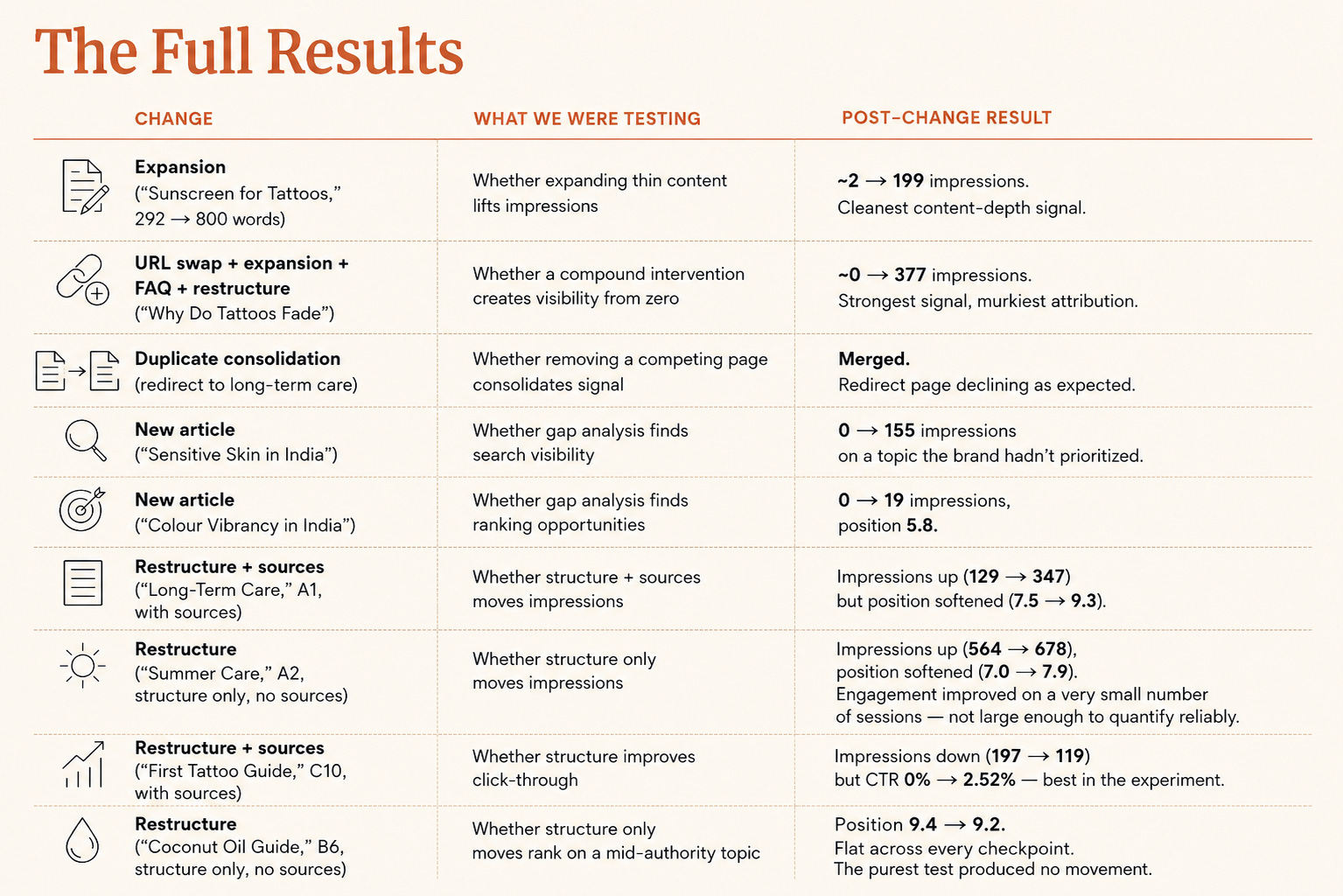
What didn’t move
Zero organic-assisted conversions. Attribution window’s too short and traffic too thin to draw revenue conclusions from that, but it’s worth stating before anyone leaps from “impressions up” to “growth.”
What we can’t see
Some of this is invisible by design, not by mistake. When AI Mode cites FYI and someone clicks through, it lands in analytics as ordinary organic traffic — no way to tell it apart. When someone reads a citation on ChatGPT and later searches the brand directly, that’s branded traffic with no trace back to the citation. When someone reads and doesn’t click at all — probably the most common outcome — nothing gets recorded anywhere.
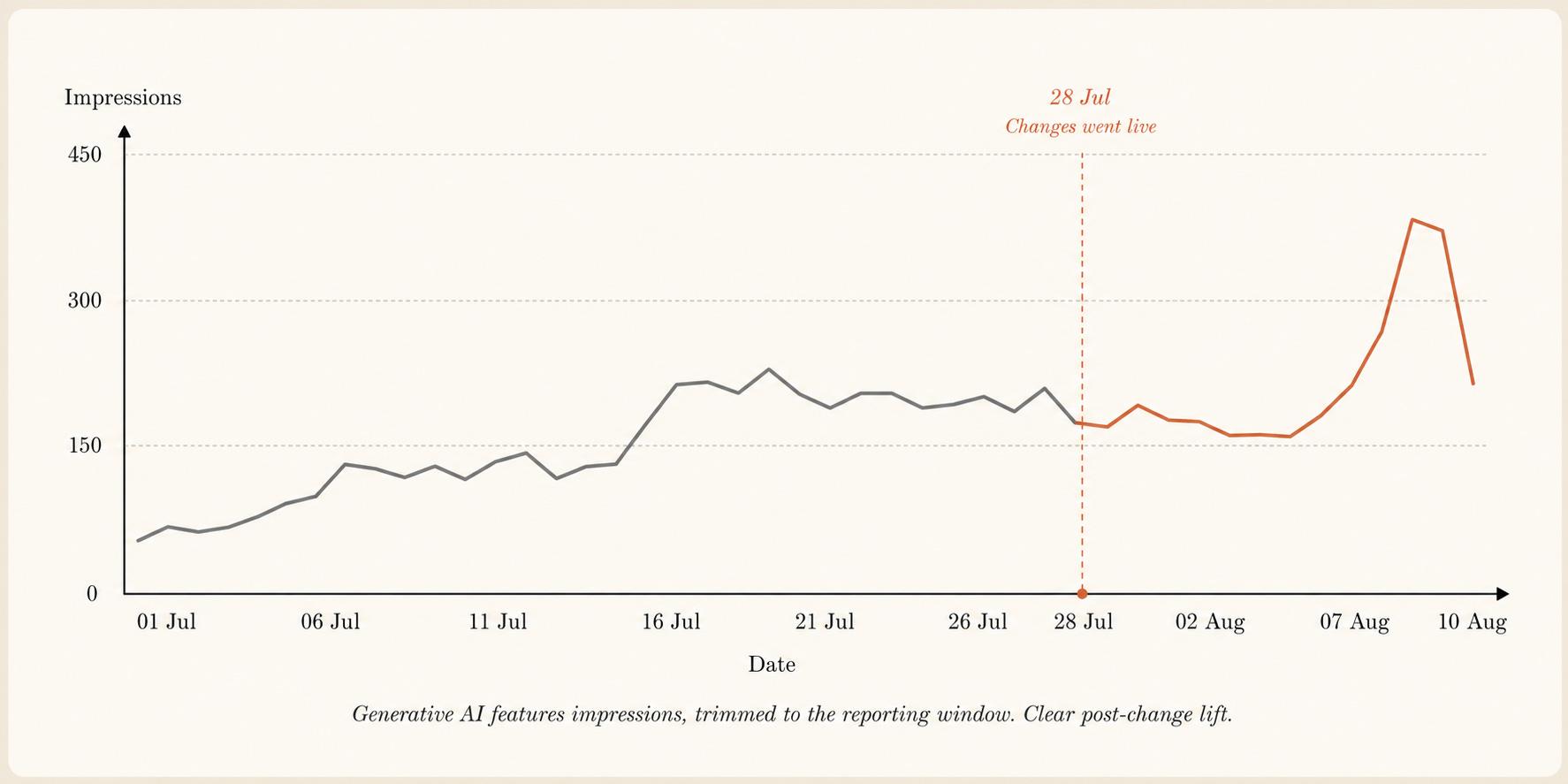
There's a number worth watching separately: FYI's impressions in Google's Generative AI features report — rose from roughly 30/day in early July to over 200/day by mid-July, then spiked to over 380/day in the days following our changes. The timing is suggestive, not proof — we can't yet separate this from broader growth or seasonal search behavior. But it's the clearest sign so far that FYI is showing up somewhere inside Google's AI-powered results.
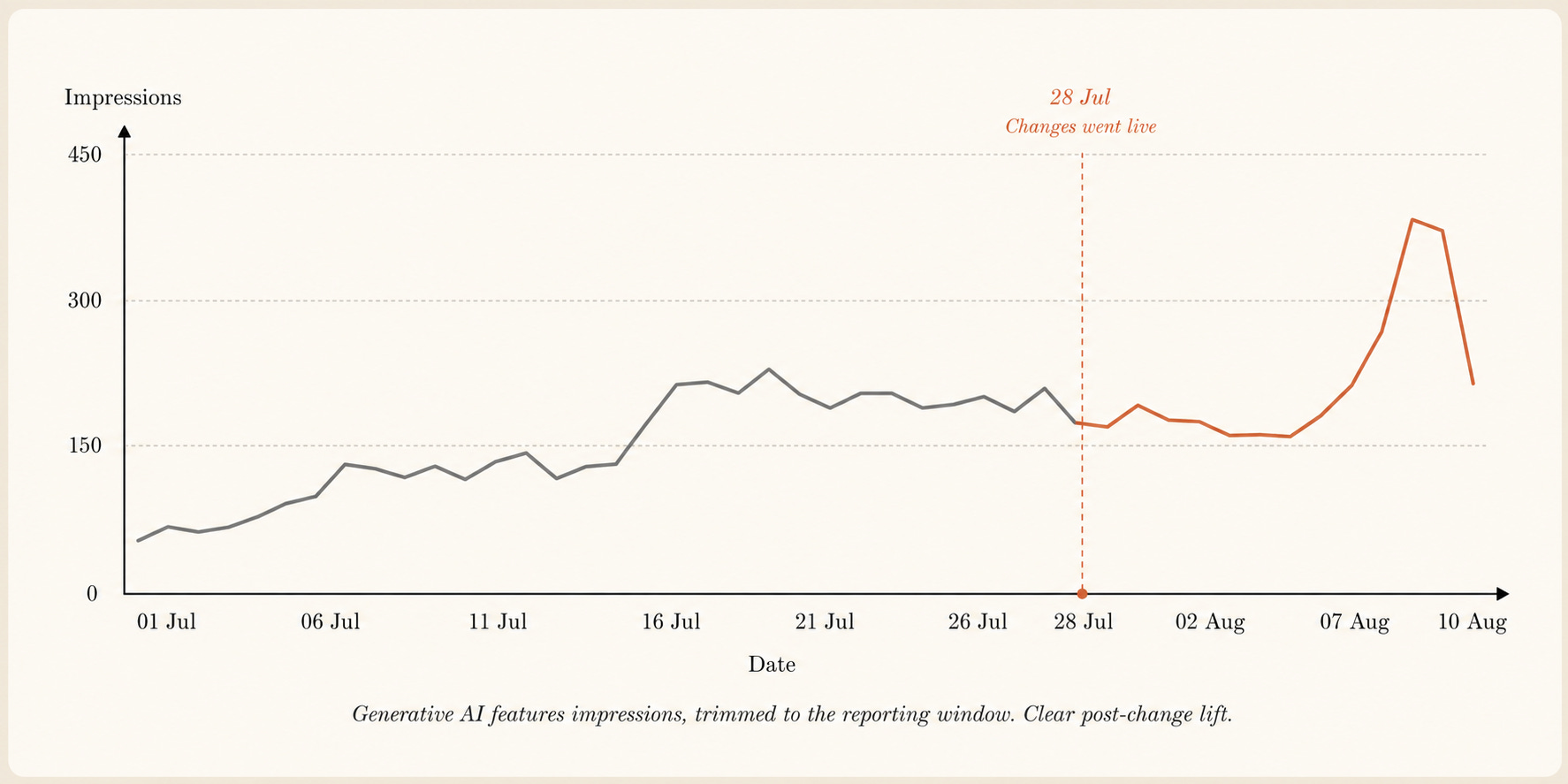
Two first-ever AI referrals arrived this window — one from Gemini, one from ChatGPT. But a referral isn't a citation — it's a downstream signal, not the thing we're actually testing.
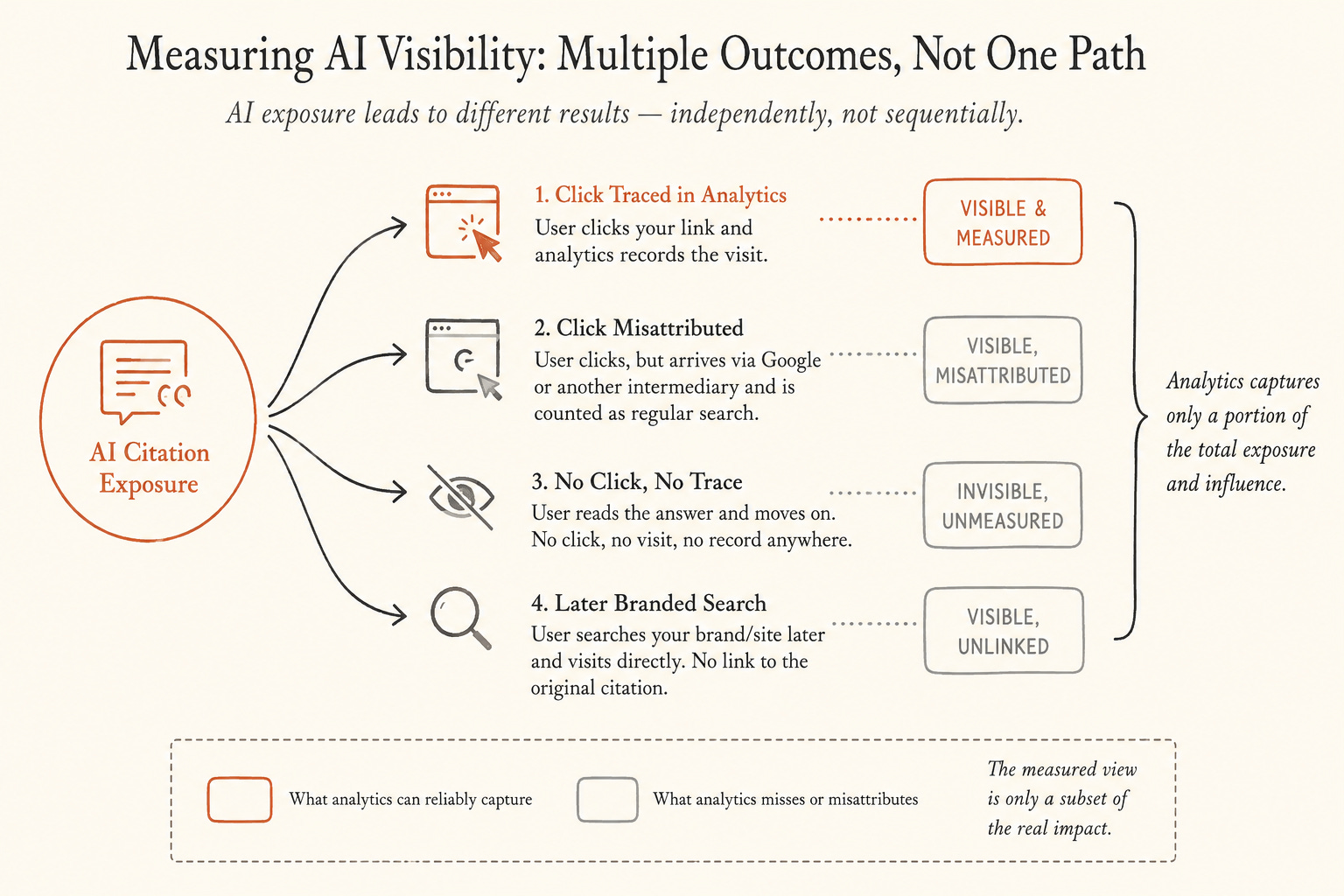
Our numbers are a floor, not a ceiling. That's exactly why the 30-day test is a manual query audit, not a dashboard pull.
What the first 14 days suggest, and what they don’t
This doesn’t prove content depth causes AI citations, or that structure doesn’t matter to AI systems — only that content depth produced a clearer Google search signal than structure alone did in these 14 days.
What we still don’t know: whether any of this moved AI citations, whether depth-versus-structure holds for AI the way it did for Google rank, and whether our two referrals are signal or noise.
What’s next
The 30-day AI citation re-run, measured against Day 0
Fixing the click-through gap on pages with impressions but no clicks
Holding the coconut oil guide unchanged as a control
Isolating depth from structure cleanly in the next round, so the result is easier to attribute than this one was
Search visibility increased on several changed pages. Blog traffic didn’t follow. Whether AI noticed is still the open question.
This is Part 2 of the Blog Citation Authority series. Part 1 covered the methodology. Read it here.
The 30-day AI citation re-run in this experiment uses the query construction method covered in How to Build the Query Set That Actually Tests Your AI Visibility.
How does AI search see your store right now?
We run real category queries across ChatGPT, Perplexity, and Google AI Mode, inspect your catalog representations, and send you a plain-language report. Completely organic; we never ask for logins or ad spend.
Request your report
Two fields. A person reviews it and emails you back within 48 hours.