What Actually Gets You Cited in AI Search (And Which "AI SEO" Rules Broke When We Tested Them)
Good ideas travel faster when you share them; forward this to someone who’d find it useful.
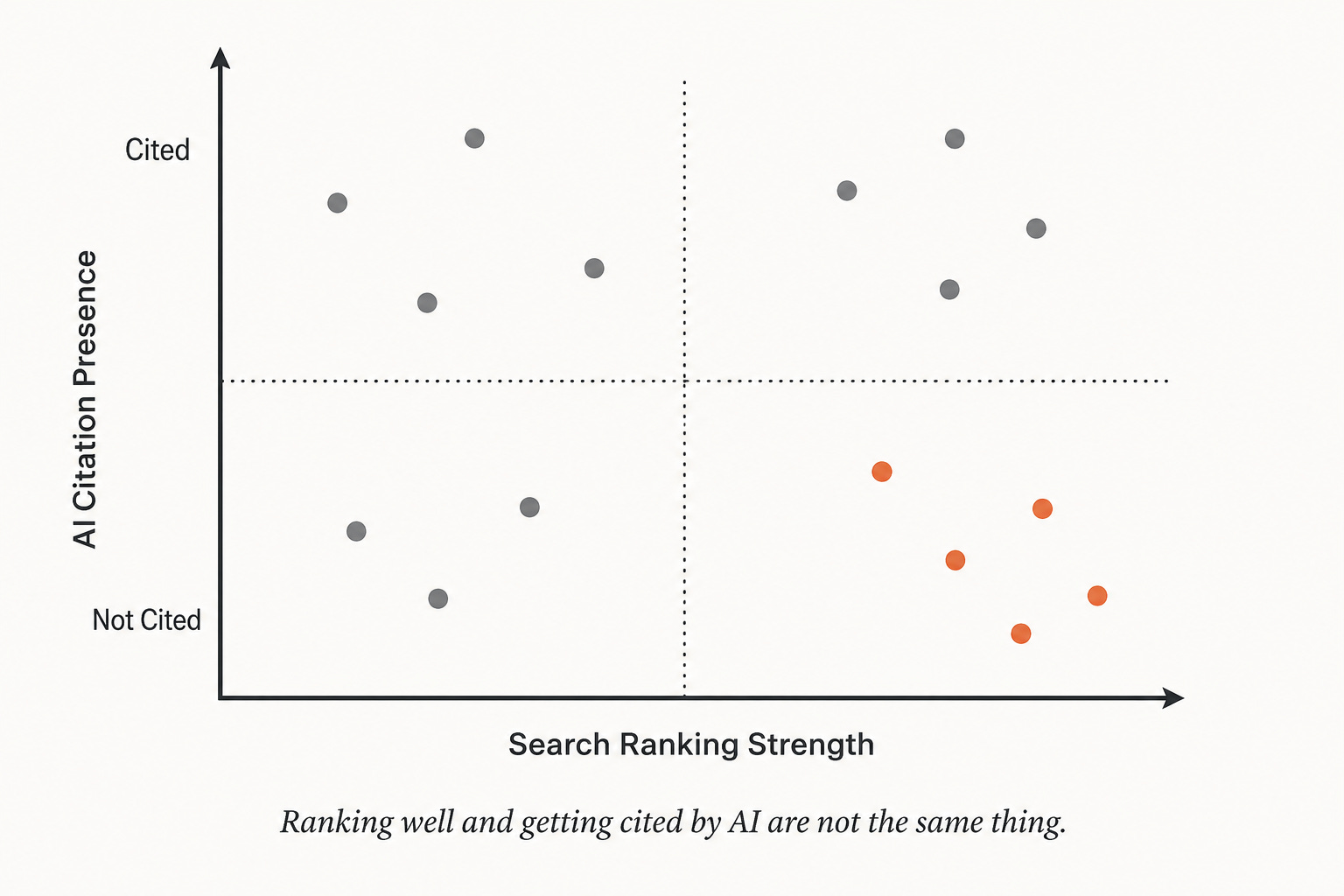
One of the pages we studied ranked position 3.4 in Google Search — comfortably on page one. It had never been cited by ChatGPT, Google’s AI Mode, or any AI surface we tested. Not once.
That single fact is why this piece exists. Ranking and getting cited by AI turned out to be different problems, and most of the “AI SEO” advice circulating right now — add FAQs, write longer content, answer the question in sentence one — hasn’t actually been tested against real citation data. We decided to test our own assumptions instead of trusting the checklists. Several of them broke.
The short version: some of the “must-do” rules didn’t matter, a few quiet patterns did, and the real work turned out to be building a repeatable testing system rather than memorizing a fixed set of tricks.
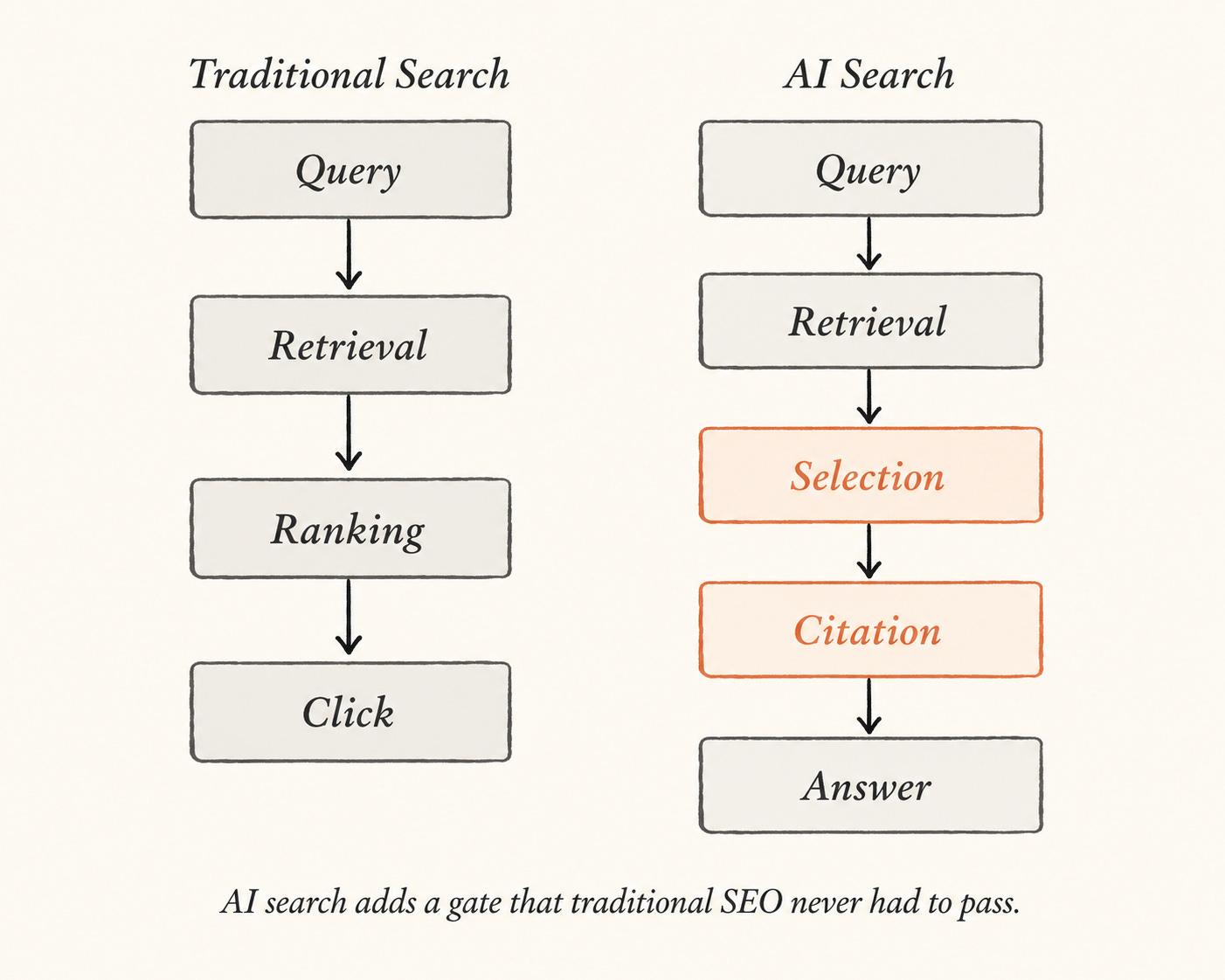
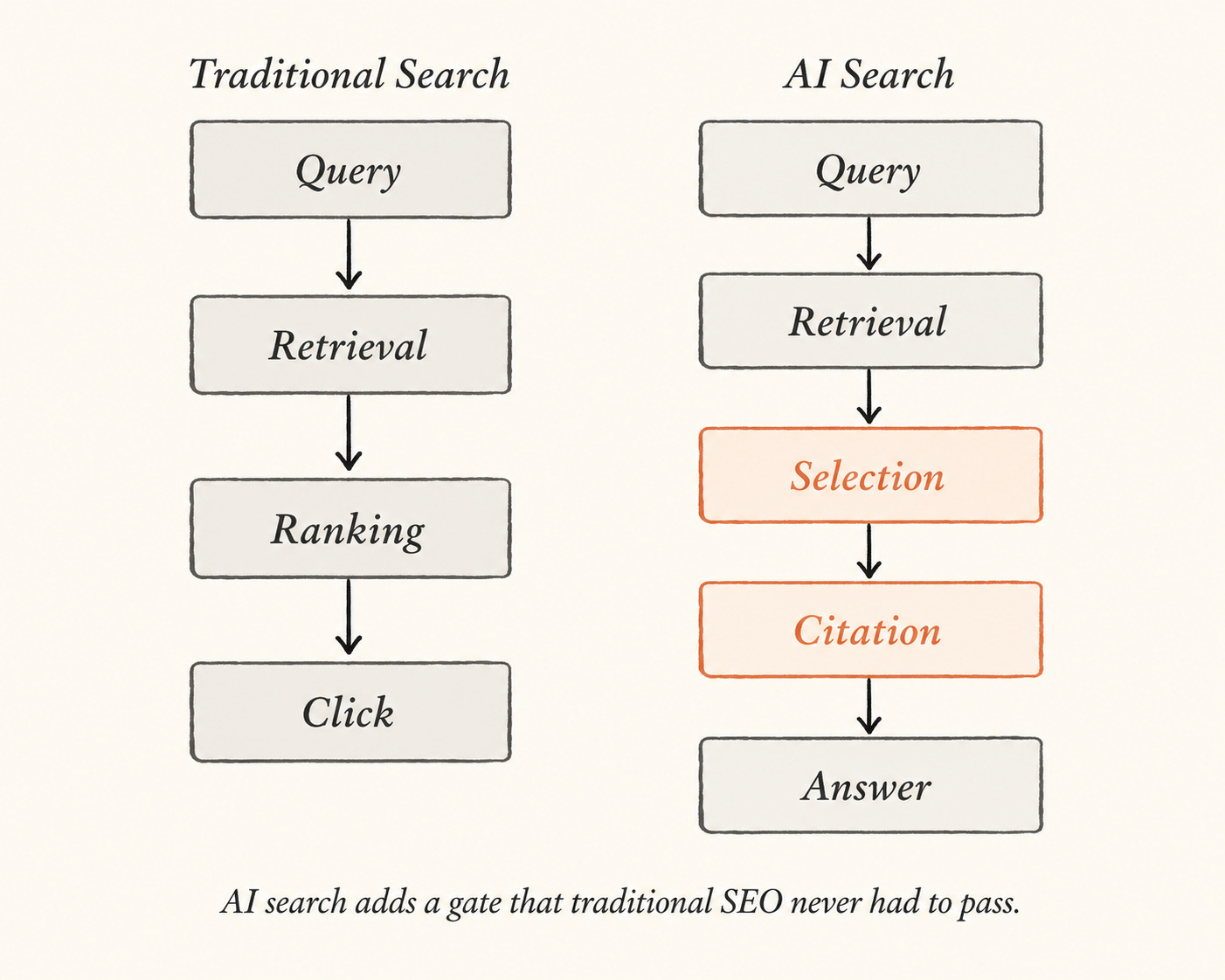
Ranking Was the Old Game. Selection Is the New One.
Traditional SEO optimizes for retrieval: does your page appear, and where does it rank. AI search introduces a second, separate gate on top of that: selection. When an AI engine answers a question, it decides which sources to name, quote, or paraphrase — and that’s a different optimization problem with different signals.
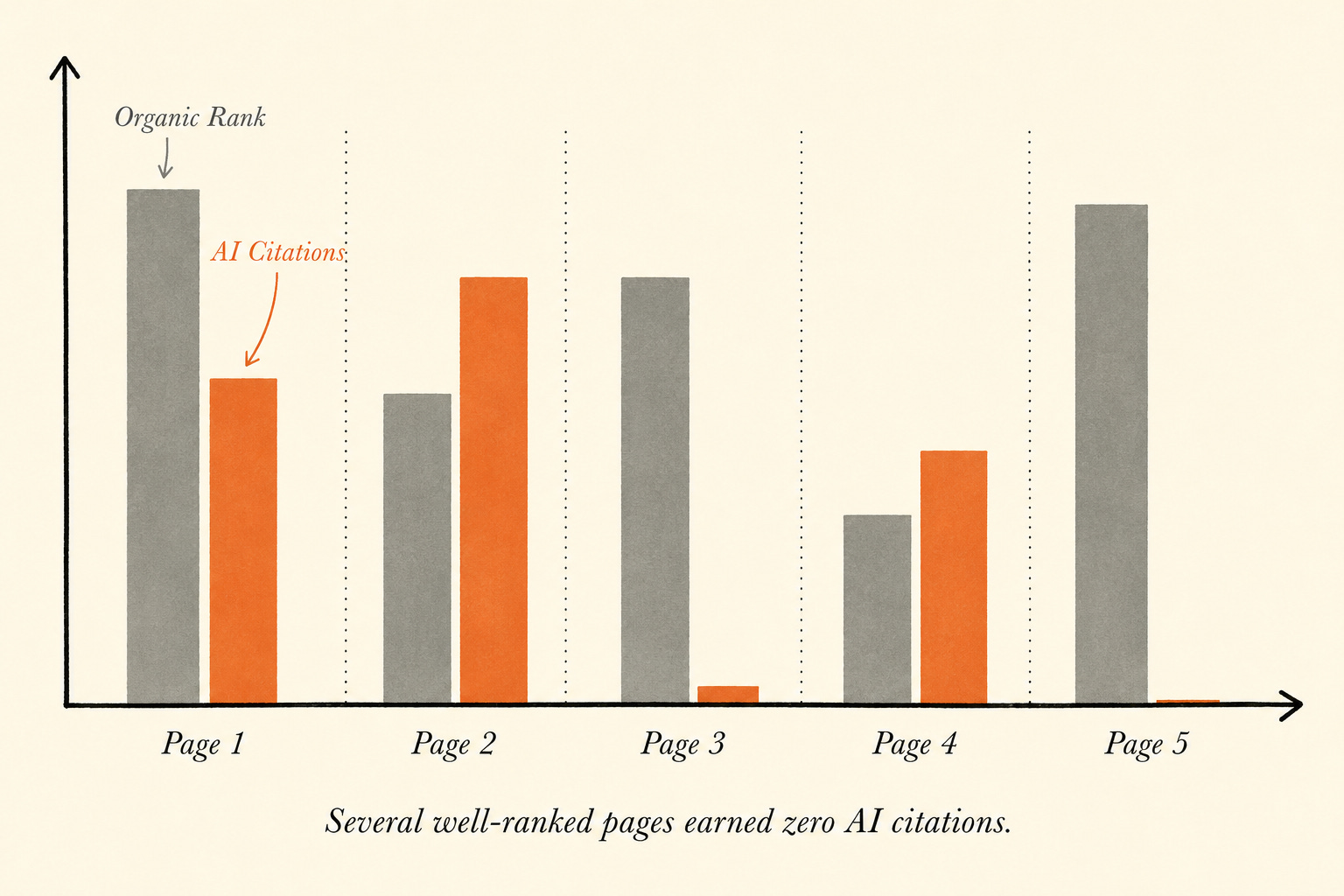
Good retrieval, zero selection, sitting in the same spreadsheet. If your reporting only tracks rank and clicks, you’ll miss whether AI answers in your category even know your content exists, let alone name you as the source.
The first mistake most brands make with AI search is optimizing for visibility before understanding selection.
How We Tested It
We ran a cold-query methodology: dozens of realistic buyer questions in a single category, tested across several AI surfaces — ChatGPT, Google Search, Google’s AI Mode, and Reddit-native answers. For each response, we scored whether a brand was genuinely recommended, merely mentioned, or absent entirely.
Our testing parameters, at a glance:
Query type: Cold, discovery-stage buyer questions (unbranded)
Surfaces tested: ChatGPT, Google Search (including AI Mode), Reddit-native answers
Scoring: Genuine recommendation / mentioned only / absent
Control: Kept fully separate from the brand’s own warm, already-converting Search Console data
One methodology decision mattered more than any individual finding: keeping signal sources separate rather than blending them. In practice, that means running two separate query banks:
Cold, persona-first queries — generic buyer questions that don’t mention the brand at all; these measure the true discovery surface
Warm, already-converting queries — pulled from a brand’s own Search Console data; these measure conversion performance and indexing maturity, not discovery
Combining the two creates a false sense of success. Warm queries reflect people who already know the brand exists. Cold queries reveal whether entirely new buyers can find it at all. Mixing them hides the exact problem this kind of testing is meant to uncover. We kept them as two separately labeled lenses throughout, and it’s the reason the Search Console section below exists at all.
That decision paid off directly. Cross-checking AI citation results against the brand’s own organic search data surfaced something the citation study alone couldn’t have shown on its own — more on that below.
The Pattern That Actually Mattered: Segmented Specificity
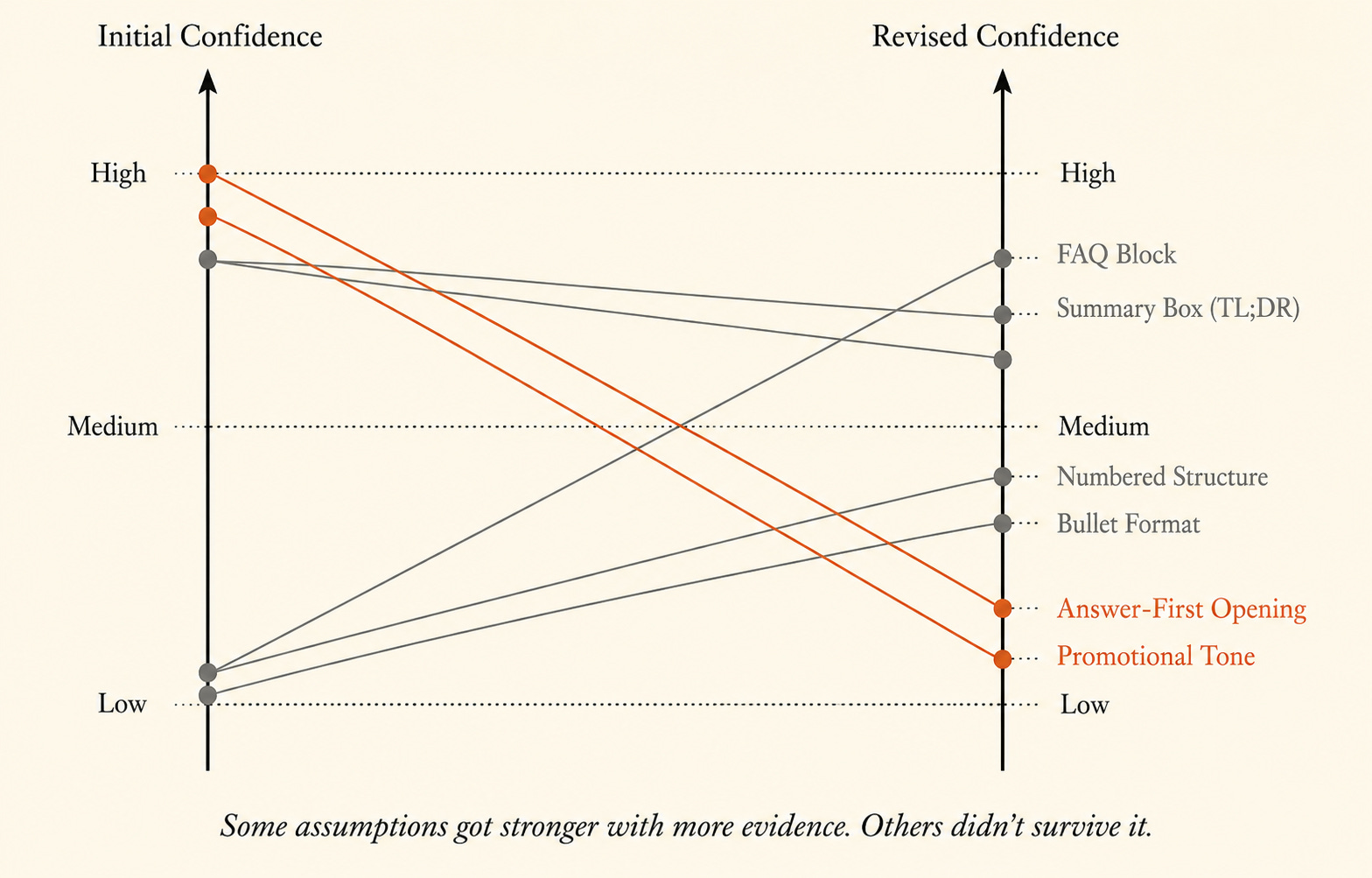
We started with a small set of hypotheses about what makes content citable, built from an early pass of competitor articles. Then we expanded the evidence base — more articles, more competitors, more sources — and re-checked every hypothesis against the larger set.
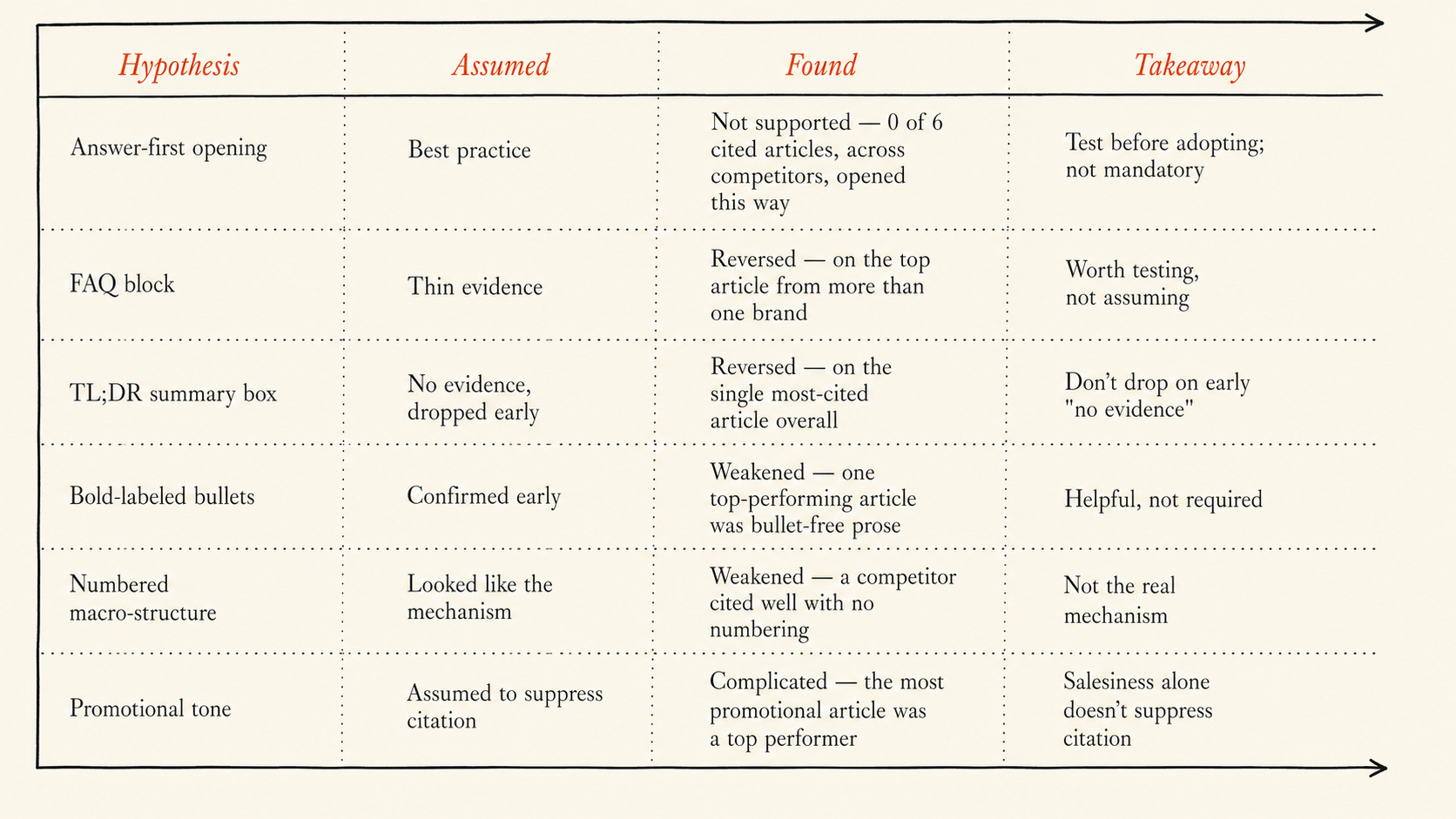
We’re flagging these reversals deliberately, and softening the language on purpose: this reflects one category, tested at one point in time, not a universal law. A “here are the seven rules” article is indistinguishable from the hundred other AI-SEO checklists already out there. “We tested the rules and some of them broke” is a different kind of claim, and it’s the one we can actually stand behind.
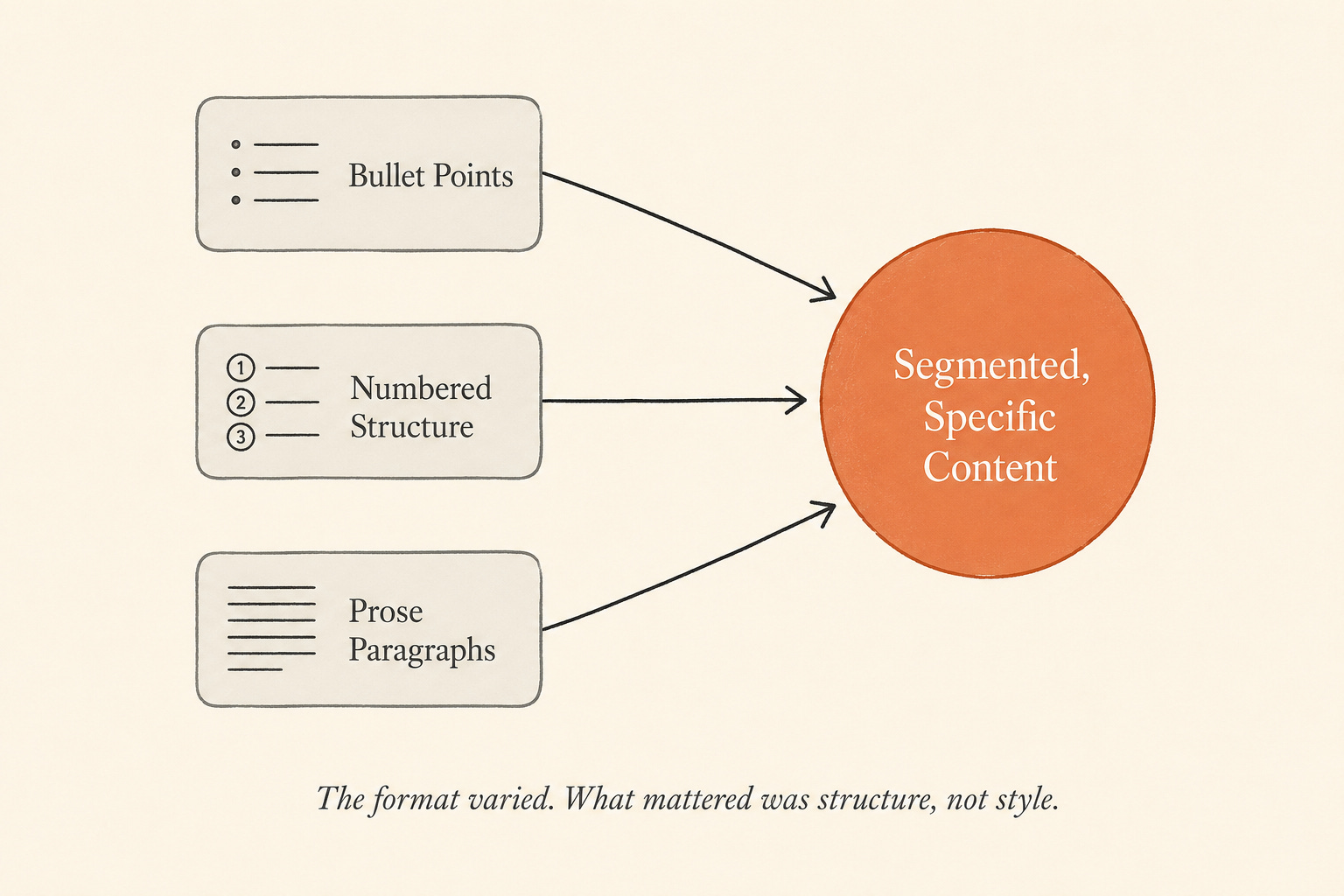
The pattern that actually held up, across every format variation: every well-cited article was clearly segmented — broken into a cause-by-cause or stage-by-stage structure — and filled with real specificity: named products, named ingredients, named experts. Whether that segmentation showed up as numbered lists, bullets, or plain paragraphs mattered far less than the fact that segments existed at all. The mechanism of segmentation and specificity mattered more than its formatting.
Our working theory — untested, offered as a hypothesis rather than a finding — is that AI systems reward content that reduces uncertainty quickly: a clearly segmented, entity-specific structure may simply be easier for an AI system to isolate and cite than a well-written but loosely structured narrative. We haven’t tested this mechanism directly, so we’re stating it as our current best guess, not a conclusion.
AI Visibility Is More Concentrated Than Expected
The comfortable assumption is that AI search “democratizes” discovery — that anyone with decent content has a shot, unlike traditional SEO’s winner-take-most dynamics.
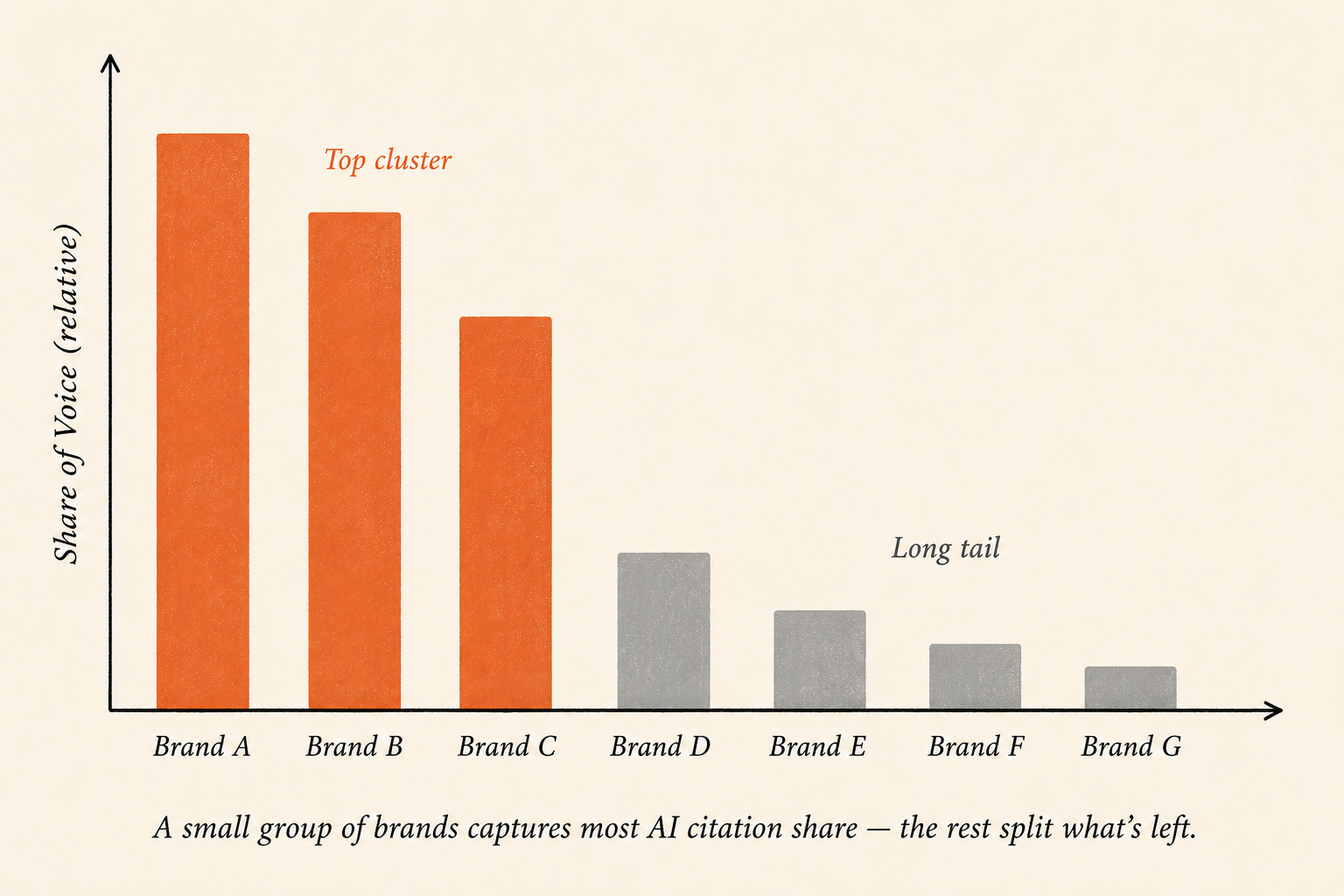
Our data pointed somewhere else. In the category we studied, citation share wasn’t spread evenly across dozens of competitors, and it wasn’t a clean two-horse race either. A handful of players repeatedly captured most of the citation share, while a long tail of otherwise-competent brands split what was left — closer to “winner-takes-most” than “everyone with decent content has a shot.”
Importantly, this concentrated cluster wasn’t identical to the traditional SEO winners in the same category. Some strong organic performers barely appeared in AI answers; some frequently-cited sources weren’t consistently top-ranked in classic search results. AI search may be building a new layer of winners, and it isn’t necessarily the same layer that won at traditional SEO.
A Second Signal: What Search Console Data Confirmed
We didn’t stop at citation testing. We also pulled the same brand’s own organic search performance data as an independent cross-check — not to generate the query set (a brand’s own search data reflects what’s already converting, a biased “warm” signal, not a cold discovery signal) but to sanity-check the citation findings against a completely different measurement source. Two distinct findings came out of it.
Finding 1: The Page-One Paradox
Several pages ranked respectably in organic search — position 3 to 9, solidly on page one — while earning zero AI citations, and in a few cases, close to zero organic clicks despite the good position. That’s not a ranking problem; it’s a snippet-and-selection problem sitting on top of an otherwise fine ranking. It’s some of the cleanest evidence we have for the core premise of this whole piece: it’s possible to win the old game and still lose the new one, visible in the same spreadsheet.
Finding 2: A Confound We Caught Before It Could Contaminate a Result
Some of the pages under study had only recently started getting real organic traffic — going from near-zero visibility to meaningful clicks within about a month, consistent with normal indexing lag on newly published content. That matters because it means any citation lift measured shortly after a content change could be partly a normal indexing ramp continuing on its own, not the change itself. We’re building that into how we read the next round of results, rather than crediting our own work for something that might have happened anyway.
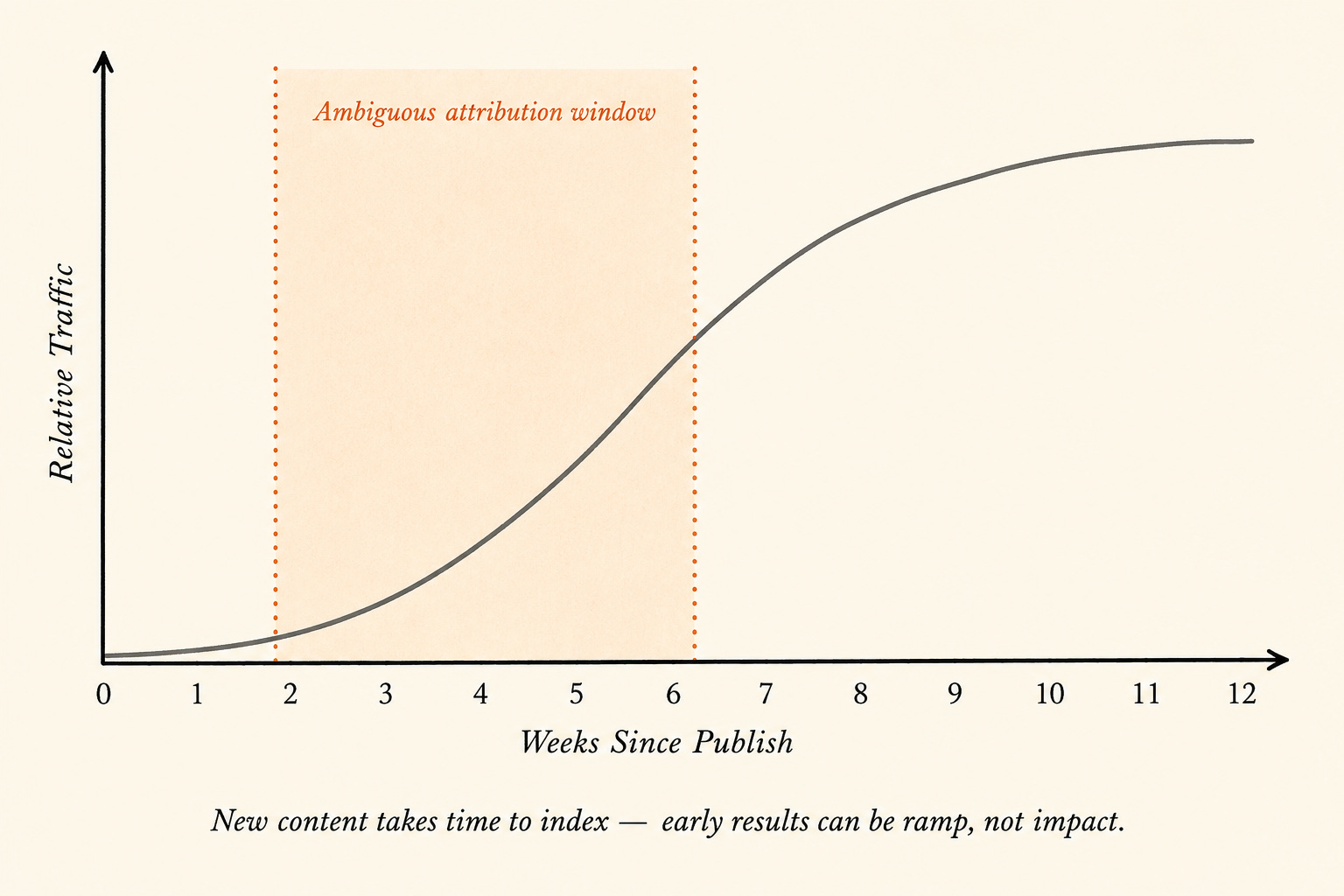
In practice: tag pages by age and indexing status, and avoid attributing early gains on brand-new content solely to on-page changes. Separate “new page ramp” from “content improvement effects” in your own analysis window.
The Citation Experiment Loop
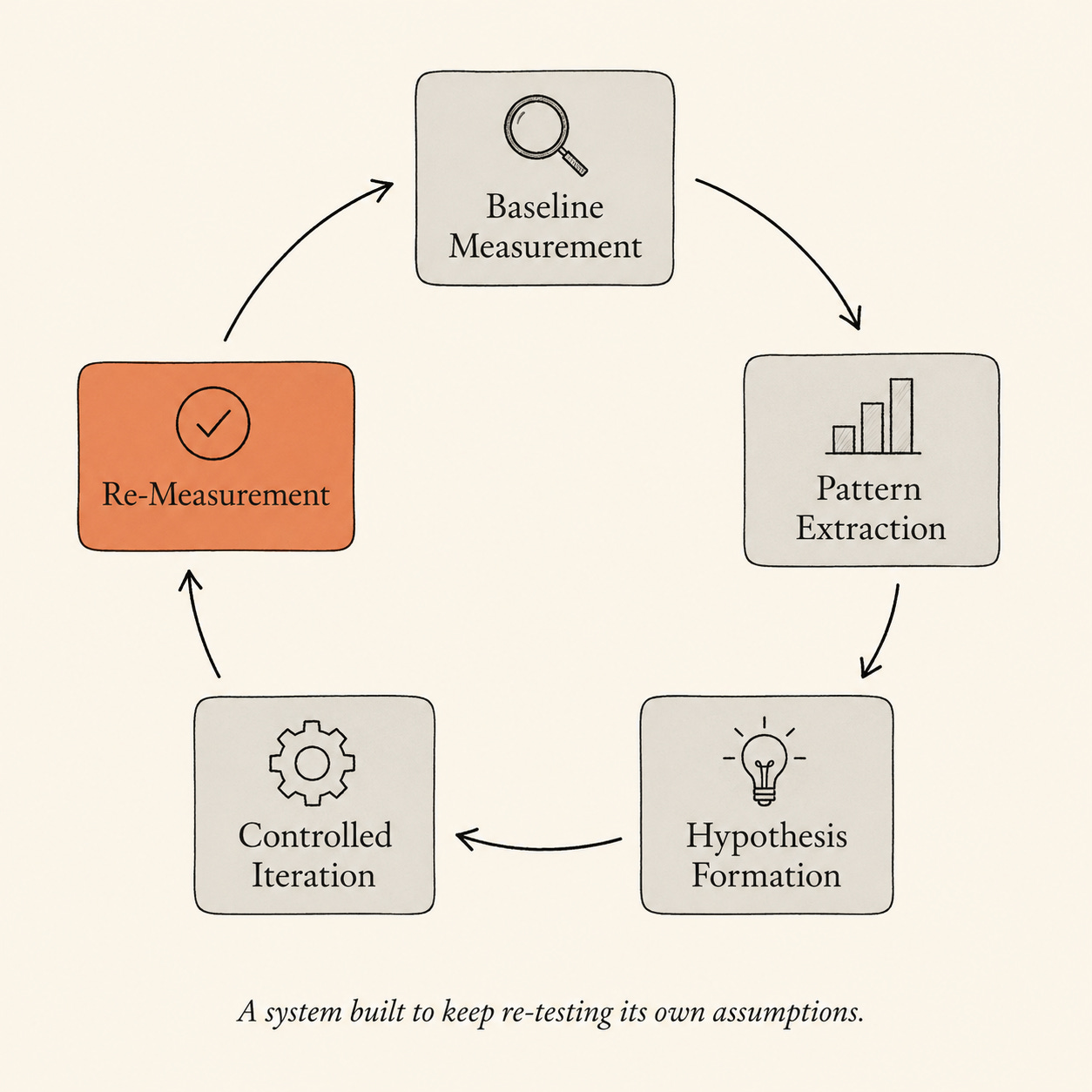
Based on all of the above, here’s the actual working method — the one thing worth copying if nothing else from this piece is:
Baseline measurement — cold-query citation testing across multiple AI surfaces, kept fully separate from any warm/already-converting signal.
Competitor pattern extraction — not from one or two articles, but from a broad enough sample that early patterns get stress-tested rather than over-trusted.
Hypothesis formation, held loosely — treat every early pattern as provisional; write it down as a testable claim and require it to survive a larger sample before acting on it.
Controlled content iteration — change one variable at a time across a small batch of articles, rather than rewriting everything at once, so a result can actually be attributed to something.
Re-measurement, with confounds named in advance — including things like indexing lag, so a real result isn’t confused with normal maturation.
Limitations
This reflects one category and a limited set of AI surfaces, observed at one point in time. Citation behavior may differ across industries, between informational and transactional queries, and as AI systems themselves continue to change. Different AI surfaces likely lean on overlapping but not identical signals — a factor that matters on one platform may matter less on another. We’re treating everything above as a working hypothesis to keep re-testing, not a universal rule.
The Real Lesson
The biggest lesson here wasn’t that FAQ blocks work or answer-first openings don’t. It was that every assumption deserves to be tested against real citation data. AI search is changing too quickly for a static checklist to stay true for long. The teams that win this won’t be the ones following this month’s rules — they’ll be the ones who keep replacing assumptions with evidence as the platforms shift underneath them.
Part two of this piece will cover what actually happened once we put this framework into practice.
How does AI search see your store right now?
We run real category queries across ChatGPT, Perplexity, and Google AI Mode, inspect your catalog representations, and send you a plain-language report. Completely organic; we never ask for logins or ad spend.
Request your report
Two fields. A person reviews it and emails you back within 48 hours.